The NCAA First and Second Rounds, Explained
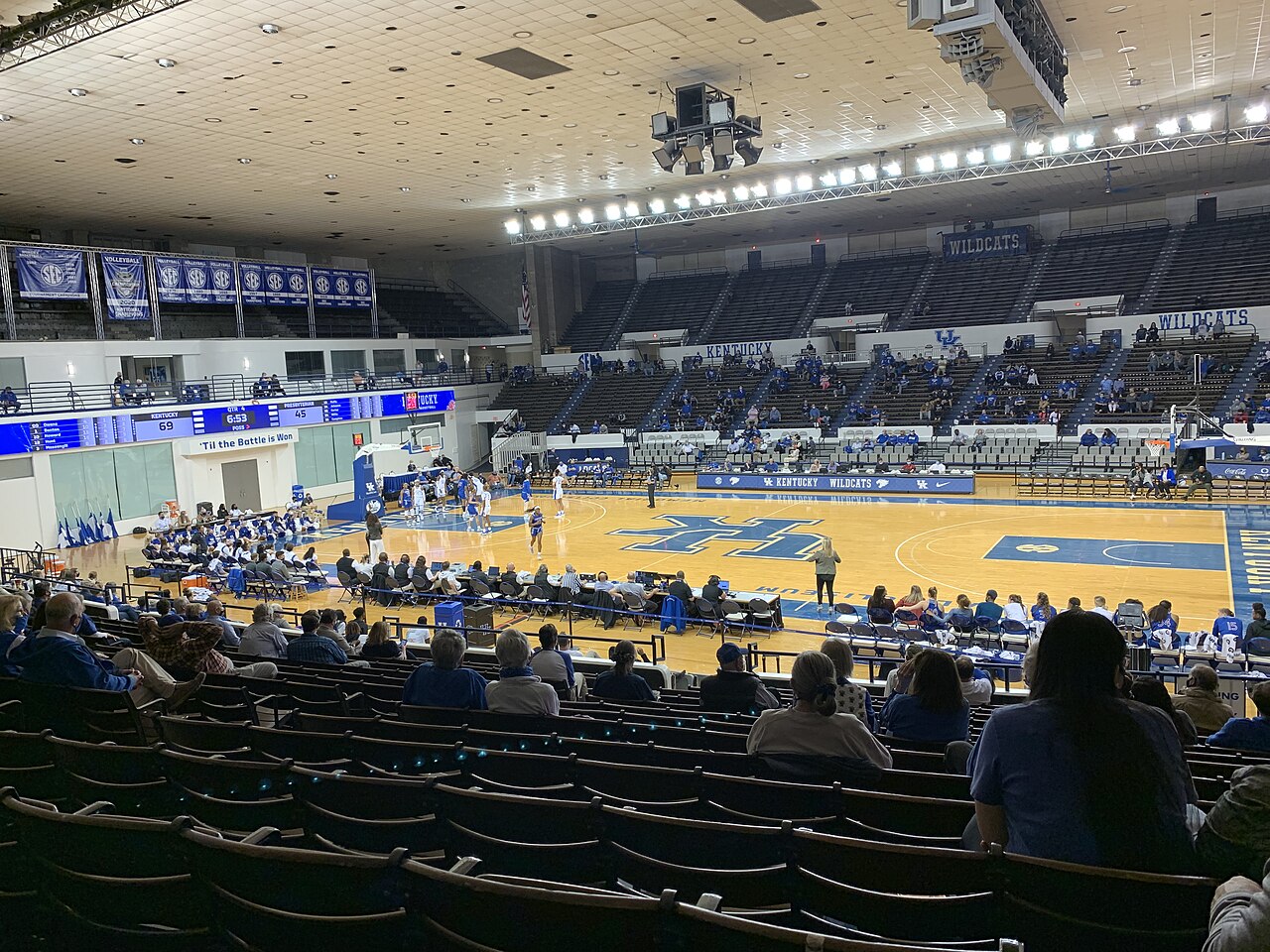
The NCAA tournament’s first weekend is the busiest stretch of the whole volleyball season. Sixty-four teams play 48 matches on 16 campuses in about three days, and by the end, only 16 are left. If your team is in the field, this is the weekend you’ll most likely be able to drive to.
This page explains how that weekend works: who plays where, who plays when, how much rest teams get, and what actually happened in the 2025 first weekend. It’s a teaching page, and we don’t project 2026 pods or hosts. The bracket comes out on Selection Sunday, Nov. 29, 2026.
Live hubs: Road to the Championship · NCAA.com DI women’s volleyball · NCAA RPI · 2026 prechampionship manual (PDF)
Related: How seeding and hosting work · Selection Sunday · The regional weekend · How to watch the NCAA tournament · RPI and résumé metrics · 2026 season overview
The short version
| Question | Answer (2026 NCAA prechampionship manual unless noted) |
|---|---|
| When? | Thursday–Friday, Dec. 3–4, or Friday–Saturday, Dec. 4–5, 2026 |
| Where? | 16 sites, each on the campus of a competing school (or an approved arena within 30 miles) |
| How many teams per site? | Four: a top-16 seed (usually the host), a team seeded in the 17–32 range, and two unseeded teams |
| How many matches per site? | Three: two first-round matches on day one, the second-round match on day two |
| Who plays the late match on day one? | The host team |
| Rest between rounds? | About 22 hours from the start of the last first-round match to the start of the second-round match |
| What does the winner get? | A spot in the regionals (the Sweet 16), Dec. 10–13 on four campuses |
How a pod is built
Each site is a mini-tournament of four teams, sometimes called a pod. Our seeding and hosting guide covers how the committee fills them, but here’s the quick version.
The committee seeds 32 of the 64 teams. The top 16 are split into four seed groupings, so each region has a No. 1, 2, 3 and 4. Teams 17 through 32 fill the No. 5 through No. 8 slots. Pods pair them “ones paired with eights, twos paired with sevens, threes paired with sixes and fours paired with fives,” in NCAA.com’s words, and each pod gets two unseeded teams. The manual says the committee avoids conference matchups in the first and second rounds.
So a typical pod looks like this:
| Day | Match | What it usually looks like |
|---|---|---|
| Day 1, first match | First round | Seeded No. 5–8 team vs. an unseeded team |
| Day 1, second match | First round | Host (a top-16 seed) vs. an unseeded team |
| Day 2 | Second round | The two day-one winners, for a spot in the regionals |
The host’s opponent is often a conference champion from a smaller league that earned an automatic bid. That’s why the late match on day one is frequently a sweep, and why the early match between two teams closer in strength can be the better watch.
Who plays when
The manual sets the timing for every first-weekend site:
- First match on day one starts between 4:30 and 6 p.m., with at least two hours between scheduled matches.
- The second match starts 30 minutes after the first one ends. The host team plays the second match.
- Second-round matches are slotted for 6:30 to 8:30 p.m., and the manual says Saturday matches must start between 2 and 8 p.m.
- Roughly 22 hours have to separate the scheduled start of the last first-round match and the start of the second-round match.
- TV can move things. The manual says television schedules may require a revised schedule, and any changes to match times or order need committee approval.
Because the host plays second, the host always gets a little less rest than the other day-one winner. In practice, that’s a tradeoff almost every host is happy to make for playing at home.
What happens between matches
The manual’s hosting rules spell out practice time, which is a good window into how tight the weekend is:
| When | Practice time |
|---|---|
| Day before the first round | Facility open noon to 10 p.m., at least 90 minutes per team |
| First-round match day | 60 minutes for every team playing that day |
| Second-round match day | 90 minutes per team, starting about seven hours before the first match |
| Any match day | Practices end at least 90 minutes before the first serve |
For the three visiting teams, the 2026 calendar leaves four or five days between the Nov. 29 selection show and their first match. Win once, and they have to recover, practice and play again the next day.
Match-day rules you’ll notice
The tournament plays under the regular NCAA rules book, with a few championship-specific details from the manual:
- Technical timeouts. In every set except a deciding fifth set, there’s a 90-second technical timeout when the first team reaches 15 points. When technical timeouts are used, team timeouts last 75 seconds. If you’re used to regular-season broadcasts, this is why the rhythm feels different. Our rally scoring guide covers the normal timeout rules.
- Home team wears white. The host team, or the higher seed when the host isn’t playing, is the home team and wears white. Every team has to bring both white and dark uniforms.
- Roster limits. Teams can dress a maximum of 18 players, and the NCAA pays travel and per diem for an official travel party of 23.
- The ball. The official ball for 2026 is the Molten IV58X-N Soft Touch, the tri-colored model.
The 2025 first weekend, by the numbers
NCAA.com’s 2025 bracket and results page lists every first- and second-round score. First-round matches were played Dec. 4 and 5, and second-round matches Dec. 5 and 6. We tallied them by seed grouping:
| Group | First round | Second round | Reached the regionals |
|---|---|---|---|
| Top-16 hosts (regional Nos. 1–4) | 16–0 | 15–1 | 15 of 16 |
| No. 5 seeds | 3–1 | 0–3 | 0 |
| No. 6 seeds | 3–1 | 0–3 | 0 |
| No. 7 seeds | 0–4 | none played | 0 |
| No. 8 seeds | 2–2 | 0–2 | 0 |
| Unseeded teams vs. seeds | 8–24 | 1–7 | 1 (Cal Poly) |
A few things that stand out:
- Home court was close to automatic. All 16 hosts won their first-round matches, and 15 of 16 won again the next night. The only host to lose was No. 4 USC, beaten in five sets by unseeded Cal Poly, which had already knocked off No. 5 BYU in five the night before.
- The 17–32 seeds went 8–8 in the first round. Half of the teams seeded No. 5 through No. 8 lost to unseeded opponents on day one, and none of the eight that advanced beat a host.
- Every No. 7 seed lost. Tennessee (to Utah State), Western Kentucky (to Marquette), Rice (to Florida) and South Dakota State (to Arizona) all went out in the first round.
- The 1-vs-8 pairing didn’t always happen. Kansas State beat No. 8 San Diego in five, then lost to No. 1 Nebraska in the second round. Michigan beat No. 8 Xavier, then lost to No. 1 Pittsburgh.
- Unseeded teams from power leagues were dangerous. Of the eight unseeded first-round winners, Florida, Michigan, Arizona, Kansas State, North Carolina, Utah State, Marquette and Cal Poly, several came from big conferences and simply landed outside the top 32.
One year isn’t a trend, so treat these as a picture of how the format behaves, not a forecast for 2026.
How to follow it as a fan
- Look up your pod on Selection Sunday. The bracket shows the four teams at each site. Check whether your team is the host, the seeded visitor or an unseeded team, because that tells you whether it plays early or late on day one.
- Plan for back-to-back nights. If you’re traveling to a site, the second-round match is the next day (Thursday–Friday or Friday–Saturday).
- Watch the early match. The 5-through-8 seed against an unseeded team split 8–8 in 2025, and seven of those 16 matches went five sets.
- Know what’s next. Second-round winners go to four campus regionals, Dec. 10 and 12 or Dec. 11 and 13. See The NCAA Regional Weekend, Explained.
- Check the numbers before the bracket drops. Our Daily Desk tracks team hitting percentage, blocks and serving through the season, which is a good way to size up an unfamiliar opponent in your pod.
2026 dates to know
| Landmark | 2026 (prechampionship manual) |
|---|---|
| Selection show | Sun., Nov. 29, 6 p.m. Eastern on ESPN |
| First and second rounds | Thu.–Fri., Dec. 3–4, or Fri.–Sat., Dec. 4–5, 16 campus sites |
| Regionals | Dec. 10 and 12, or Dec. 11 and 13, four campus sites |
| Semifinals and final | Dec. 17 and 20, Alamodome, San Antonio |
The manual’s date formula puts the first and second rounds on the first Thursday–Friday or Friday–Saturday after Thanksgiving weekend. Times and sites can change, so confirm on NCAA.com once the bracket is out.
Related reading
- How NCAA Tournament Seeding and Hosting Work
- NCAA Selection Sunday: What Matters
- The NCAA Regional Weekend, Explained
- Understanding Résumé Metrics in Volleyball
- NCAA Women’s Volleyball 2026 Season Overview
- How to Watch the 2026 NCAA Volleyball Tournament
- Daily Desk
Sources
- NCAA — 2026 DI Women's Volleyball Prechampionship Manual (PDF, September 2026) (2026 dates and date formula; 16 first/second-round sites on campus; start-time windows; host plays second match; ~22 hours between rounds; practice-time requirements; technical timeout at 15, 90 seconds, team timeouts 75 seconds; home team wears white; 18 players in uniform; travel party of 23; official ball; seeding pilot and no first/second-round conference matchups)
- NCAA.com — Road to the Championship (64-team field and round structure)
- NCAA.com — 2025 championship field announcement (Nov. 30, 2025) (1–8 / 2–7 / 3–6 / 4–5 pod pairings)
- NCAA.com — 2025 bracket, schedule and scores (every 2025 first- and second-round result, Dec. 4–6; tallies by seed grouping are our count from this page)