How NCAA Tournament Seeding and Hosting Work
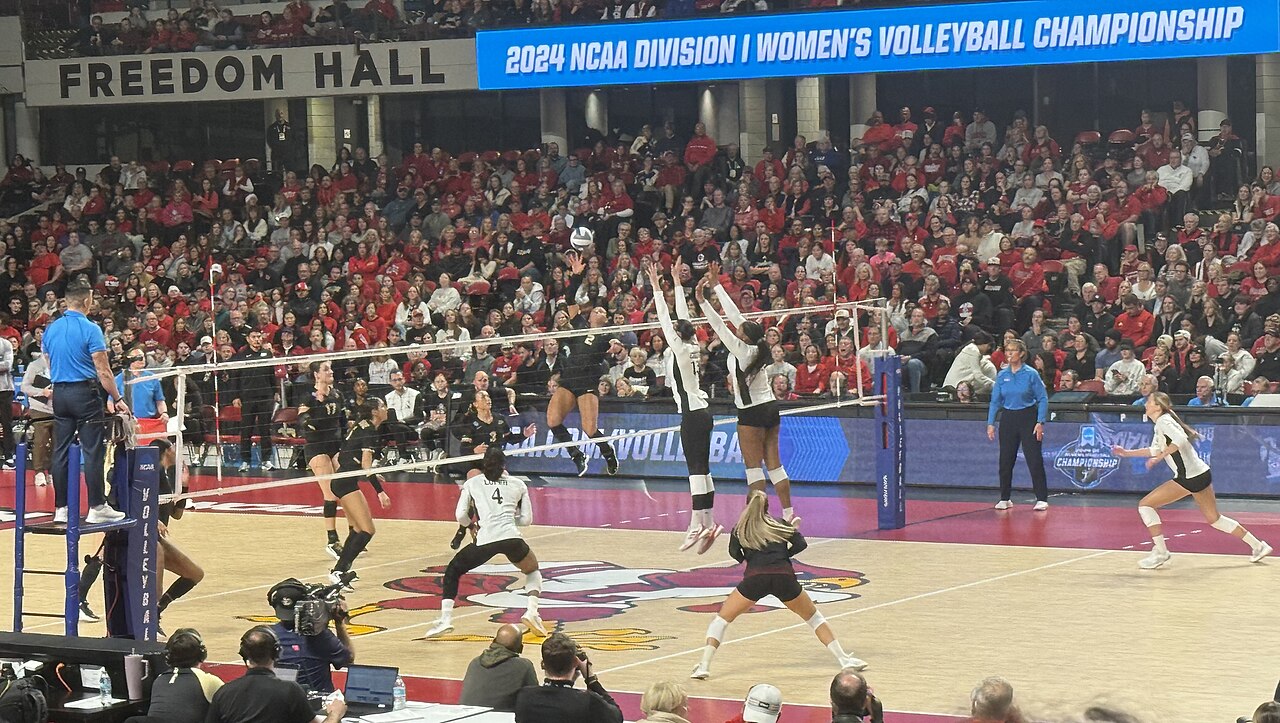
In women’s college volleyball, a seed isn’t just a number next to your name. It decides whether you play the first weekend in your own gym or on somebody else’s floor. Every December, the top 16 seeds usually open the NCAA tournament at home, and that home court is a big reason fans care so much about the difference between, say, the 16th and 17th best résumé in the country.
This page explains how the committee builds the seeds, how the pods pair up, who gets to host, and what a school has to provide to host. It’s a teaching page. We don’t project 2026 seeds or hosts. Those come out on Selection Sunday, Nov. 29, 2026.
Live hubs: Road to the Championship · NCAA.com DI women’s volleyball · NCAA RPI · 2026 prechampionship manual (PDF)
Related: Selection Sunday · First and second rounds · The regional weekend · How to watch the NCAA tournament · RPI and résumé metrics · AVCA polls explained · 2026 season overview
The short version
| Question | Answer (2026 NCAA prechampionship manual) |
|---|---|
| How many teams are seeded? | 32 of the 64, half the bracket |
| How are seeds published? | Four sets of seeds 1 through 8, one set per region |
| How are the top 16 placed? | Ranked in order, then assigned to seed groupings 1 to 4 |
| Who hosts the first and second rounds? | Seeded teams that submit a bid meeting the hosting requirements. In practice, the top 16 |
| How are pods paired? | 1 with 8, 2 with 7, 3 with 6, 4 with 5, placed by geography |
| Conference rematches early? | Avoided in the first and second rounds |
| 2026 dates | First/second rounds Dec. 3–5 on campuses; regionals Dec. 10–13 on campuses; semifinals and final Dec. 17 and 20 at the Alamodome |
The manual for the 2026 championship was posted in September 2026, and that’s the version this page uses. Where we cite the 2025 tournament, it’s to show the rules in action, not to predict this year.
Step 1: the committee picks a top 32
After the field of 64 is set (31 automatic bids and 33 at-large picks, per Road to the Championship), the DI Women’s Volleyball Committee seeds half of it. In the manual’s words, the committee “will identify the top 32 teams.”
The committee builds that list from the same résumé tools it uses for selection: RPI, KPI, head-to-head results, common opponents, significant wins and losses, record in the last 10 matches, road record, records against RPI bands, and more. Our Selection Sunday guide walks through those criteria. The AVCA coaches poll isn’t one of them, which is why seeds sometimes look different from the last poll (AVCA polls explained).
Step 2: the top 16 in order, then the rest in groupings
This is the part that confuses people, because the bracket shows seeds 1 through 8 four times instead of 1 through 32.
The 2026 manual describes a bracketing pilot the oversight committee “has again approved”:
- The top 16 are ranked in order and split into seed groupings 1 to 4. National seeds 1–4 become the four regional No. 1s, national seeds 5–8 become the No. 2s, 9–12 become the No. 3s, and 13–16 become the No. 4s.
- Seeds 17 through 32 fill groupings 5 to 8. The manual says the balance of the ranked teams “are assigned to one of the remaining seed groupings.”
- Seeds don’t move once they’re set. “Once the seed assignment is finalized, it remains unchanged while placing the teams into the championship bracket.”
- No conference matchups in the first two rounds. The committee avoids pairing league opponents in the first weekend.
So when you see “No. 3 Texas A&M” on a 2025 scoreboard, that 3 is the team’s seed inside its region. Its national seed was 9, the first team in the 3 grouping.
Step 3: pods of four
Each first-weekend site is a pod of four teams: one top-16 host, one team from the 5–8 groupings, and two unseeded teams. NCAA.com’s 2025 field announcement spelled out the pairing rule: “ones paired with eights, twos paired with sevens, threes paired with sixes and fours paired with fives,” placed geographically within their pods, with conference opponents kept apart.
That means a regional No. 1 doesn’t face a seeded team until the second round, when it meets the No. 8 seed or the unseeded team that beat it. A No. 4 host draws a No. 5, which is the closest seeded matchup of the first weekend.
| Pod | Host (seed grouping) | Paired seed | Plus |
|---|---|---|---|
| A | Regional No. 1 (national 1–4) | No. 8 (national 29–32 range) | Two unseeded teams |
| B | Regional No. 2 (national 5–8) | No. 7 | Two unseeded teams |
| C | Regional No. 3 (national 9–12) | No. 6 | Two unseeded teams |
| D | Regional No. 4 (national 13–16) | No. 5 | Two unseeded teams |
The national ranges for groupings 5 to 8 are our shorthand for how the 17–32 group fills in. The manual only says those teams are assigned to the remaining groupings, so treat the exact order inside 17–32 as the committee’s call.
Who gets to host
The first weekend
The manual’s site-selection policy is short: for championships that seed a quarter of the bracket, “sites will be awarded to the seeded teams that submit a bid that meets the requirements for hosting.” If a seeded team doesn’t submit a qualifying bid, the committee falls back on geography to place sites. The committee also separates first- and second-round conference opponents when it assigns teams to sites.
Here’s the important part for fans: a seed doesn’t host automatically. The school has to bid, and the bid has to meet the requirements below. It almost always works out that the top 16 host, but that’s because the top 16 almost always bid.
At a first-and-second-round site, the manual says the host team plays the second match on the first day, and roughly 22 hours separate the last first-round match from the second-round match.
The regional weekend
Regionals are also played on campus, at four sites that aren’t set in advance. In 2025, NCAA.com said the four regional sites would be announced Dec. 6, the final day of second-round play, and the four regional No. 1 seeds (Nebraska, Kentucky, Texas and Pittsburgh) were the hosts on the official bracket. For more on how that weekend plays out, see The NCAA Regional Weekend, Explained.
The manual doesn’t publish a step-by-step order for what happens when a would-be regional host loses early, so we won’t invent one. Watch the NCAA’s regional-site announcement each year.
What a host has to provide
From the “Prospective Hosts” section of the 2026 manual:
| Requirement | What the manual says |
|---|---|
| Where | All first-, second-round and regional matches are played on the campus of a participating school |
| Off-campus arena | Allowed if it’s within 30 miles of the main campus and the committee approves it in advance. The school doesn’t have to play regular-season matches there |
| Practice time | The facility must be available for four teams to practice and compete, including at least 90 minutes per team the day before |
| Net system | An in-floor net system is mandatory |
| Locker rooms | Separate locker rooms of comparable quality for each team |
| Hotels | Comparable hotels near the venue, with at least 16 double-double rooms at each team hotel |
| Money | A financial guarantee of $10,000 to host the first and second rounds and $15,000 to host a regional |
| Paperwork | A separate proposed budget for each round, submitted through the NCAA’s championships bid portal |
The 2026 manual lists Tuesday, Nov. 10 as the deadline to submit proposed budgets, and the bid portal section says all bid materials are due Nov. 11. Either way, schools commit to hosting before they know their seed.
Home team, white jerseys
The host team, or the higher-seeded team when the host isn’t playing, is the home team and wears white in first-weekend and regional matches. Every team has to bring both white and dark uniforms.
The 2025 bracket as a worked example
NCAA.com published the 2025 national seeds as: 1 Nebraska, 2 Kentucky, 3 Texas, 4 Pittsburgh, 5 SMU, 6 Stanford, 7 Arizona State, 8 Louisville, 9 Texas A&M, 10 Creighton, 11 Wisconsin, 12 Purdue, 13 Minnesota, 14 Indiana, 15 USC, 16 Kansas. ESPN’s 2025 tournament release listed all 16 as first-and-second-round hosts, grouped exactly the way the pilot describes.
| Seed grouping | National seeds | 2025 hosts |
|---|---|---|
| Regional No. 1 | 1–4 | Nebraska, Kentucky, Texas, Pittsburgh |
| Regional No. 2 | 5–8 | SMU, Stanford, Arizona State, Louisville |
| Regional No. 3 | 9–12 | Texas A&M, Creighton, Wisconsin, Purdue |
| Regional No. 4 | 13–16 | Minnesota, Indiana, USC, Kansas |
A few things the 2025 results (NCAA.com recap) teach about seeding and hosting:
- Home court helps, but it isn’t a guarantee. Unseeded Cal Poly beat No. 5 BYU and then host USC in five sets in the second round, then reached the regional semifinals.
- The 1-vs-8 pairing showed up as designed. Nebraska’s pod had No. 8 San Diego, but unseeded Kansas State beat San Diego in five, so the Huskers faced Kansas State in the second round.
- A 3 seed can win it all. Texas A&M, the No. 9 national seed and a regional No. 3, won its own first weekend, beat Louisville and then Nebraska at the Lincoln regional, and won the national title over Kentucky.
- Regional hosts lose too. Two of the four regional hosts, Nebraska and Texas, lost their regional finals at home.
How to use this as a fan
- Watch the 16 line, not just the top 4. In late November, the race that changes the most travel plans is for seeds 13 through 16, because that’s the difference between hosting and flying out.
- Read the RPI, not the poll, for hosting debates. The committee’s résumé tools are the ones that matter (RPI guide).
- Expect geography in the 5–8 groupings. Teams seeded 17 through 32 are placed by geography inside their pods, so a lower seed close to a host can land there even if the numbers look odd.
- Check the regional-site announcement. Regional sites aren’t predetermined, so wait for the NCAA’s announcement before booking travel.
2026 dates to know
| Landmark | 2026 (prechampionship manual) |
|---|---|
| Budget deadline for prospective hosts | Tue., Nov. 10 |
| Bid materials due | Nov. 11 |
| Selection show | Sun., Nov. 29, 6 p.m. Eastern on ESPN |
| First and second rounds | Dec. 3–4 or Dec. 4–5, 16 campus sites |
| Regionals | Dec. 10 and 12, or Dec. 11 and 13, four campus sites |
| Semifinals and final | Dec. 17 and 20, Alamodome, San Antonio |
Times and sites can change. Confirm on NCAA.com as Selection Sunday gets closer.
Related reading
- How the NCAA Picks Its 33 At-Large Volleyball Bids
- NCAA Selection Sunday: What Matters
- The NCAA Regional Weekend, Explained
- Understanding Résumé Metrics in Volleyball
- AVCA Polls Explained
- NCAA Women’s Volleyball 2026 Season Overview
- Daily Desk
Sources
- NCAA — 2026 DI Women's Volleyball Prechampionship Manual (PDF, September 2026) (bracketing pilot: top 32 seeded, top 16 in rank order to groupings 1–4, balance to 5–8, seeds fixed, no first/second-round conference matchups; site selection to seeded teams that bid; prospective-host requirements incl. 30-mile off-campus rule, in-floor nets, 16 double-double rooms; $10,000 / $15,000 guarantees; Nov. 10 budget and Nov. 11 bid deadlines; host plays second match; home team wears white; 2026 dates)
- NCAA.com — Road to the Championship (64 teams; 31 automatic / 33 at-large; 2026 round dates)
- NCAA.com — 2025 championship field announcement (Nov. 30, 2025) (2025 top-16 seeds; 1–8 / 2–7 / 3–6 / 4–5 pairings placed geographically; regional sites announced Dec. 6)
- ESPN Press Room — 2025 tournament coverage release (2025 first/second-round hosts by seed grouping)
- NCAA.com — 2025 bracket, schedule and scores (Cal Poly over BYU and USC; Kansas State over San Diego; Texas A&M title path)
- NCAA.com — 2025 printable bracket (host institutions marked, including regional hosts)