Walk-Ons in College Volleyball
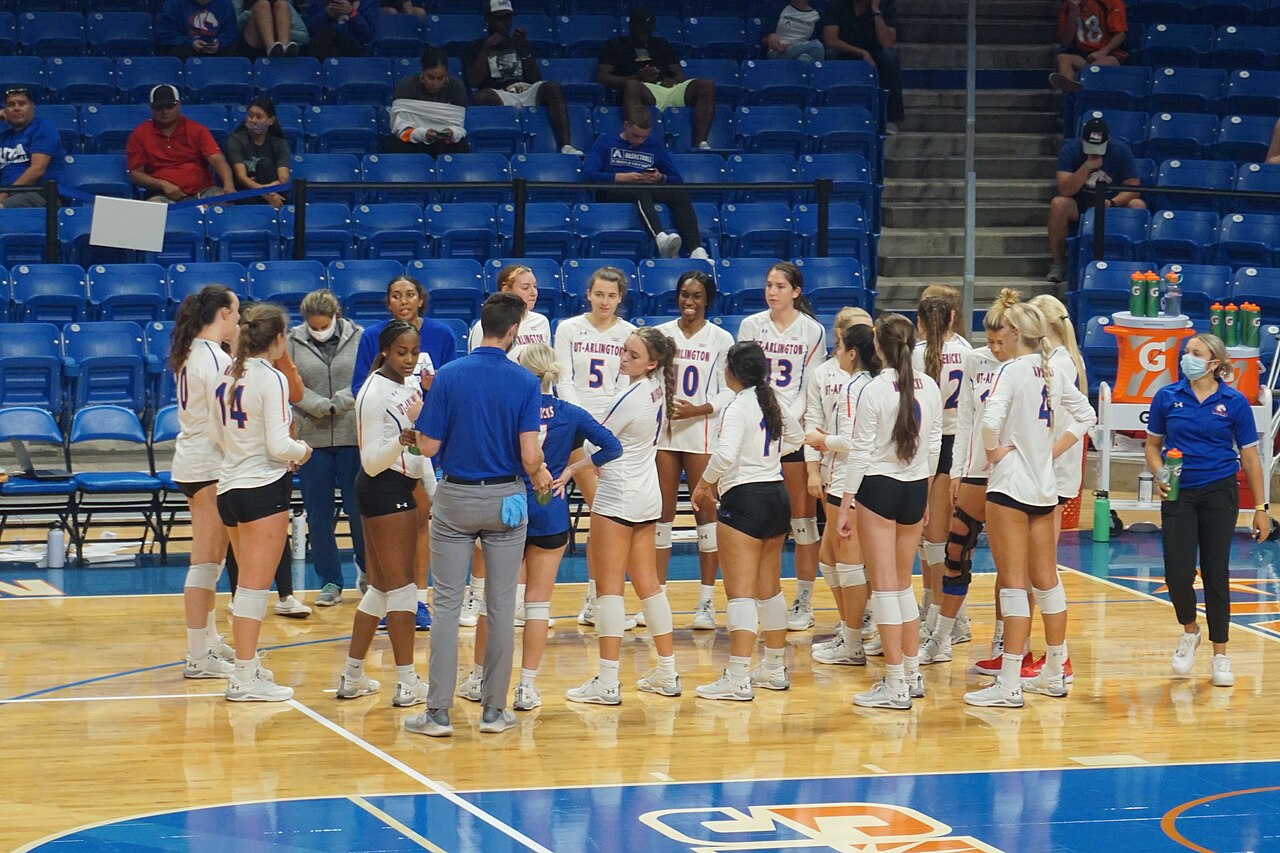
“Walk-on” sounds like someone wandered in from the rec center, laced up, and talked their way into the gym. In women’s college volleyball it usually means something much less cinematic: a player who is on the team without an athletics scholarship. Some were recruited hard. Some tried out as enrolled students. A few earned aid later.
What changed is the math. At Division I schools that opted into the House settlement, a women’s volleyball roster is capped at 18, and a walk-on counts the same as a full-scholarship All-American. That makes a walk-on spot more valuable, and harder to find, than it used to be.
Primary sources: NCAA Division I Bylaw 17.2 roster limits, the NCAA Q&A on implementing the House settlement (updated May 29, 2026), DI Bylaw 17.02.15 on enrolled-student tryouts, and NCAA Eligibility Center registration.
Not compliance advice. Rules change, opt-in status varies by school, and the compliance office on that campus has the final word. This page tells you which questions to ask.
Related: Scholarship types explained · D1 vs D2 vs D3 · How to email a college coach · Academic eligibility
What a walk-on actually is
The NCAA’s own education materials describe a walk-on as someone who is not typically recruited by a school and does not receive a scholarship from it, but becomes a member of one of its teams. In practice, volleyball families hear three flavors:
| What people call it | What it usually means | Is it an NCAA rule category? |
|---|---|---|
| Preferred (or recruited) walk-on | A coach recruited you and offered a roster spot, but no athletics aid, at least to start | No. It is coaching vocabulary. The Eligibility Center even puts “preferred” in quotation marks. |
| Tryout walk-on | You enrolled first, then earned a spot through a campus tryout | No category of its own, but the tryout itself is governed by NCAA bylaws (more below) |
| Walk-on who earns aid later | You started without athletics aid and were awarded some in a later year | Possible, but only if the school offers it. Nothing guarantees it. |
The one thing every flavor shares: no athletics aid agreement at the start. You may still have academic or need-based aid, which is a separate conversation. See scholarship types explained.
The 18-player math (Division I)
Starting in 2025-26, Division I schools in the five defendant conferences (ACC, Big Ten, Big 12, Pac-12, SEC) and any other school that opts in to the House settlement play under sport-by-sport roster limits instead of scholarship limits. Bylaw 17.2 sets women’s volleyball at 18.
Two things follow, and both matter to walk-ons:
- Those schools may offer scholarships to any and all of those 18. The NCAA’s own announcement said the change removes sport-specific scholarship limits for schools that opt in.
- Every rostered player counts toward 18, scholarship or not. A walk-on is not a free extra body. She is one of the 18.
So at an opt-in school, a coach deciding between an 18th scholarship player and a walk-on is choosing between two people for the same seat. That is why “preferred walk-on” offers at opt-in programs deserve a direct question: Am I one of your 18?
Schools that did not opt in do not have to follow the Bylaw 17.2 limits, per the NCAA Q&A. Their aid still has a ceiling: the Q&A uses women’s volleyball as its example, explaining that a nonparticipating school may give athletics aid to more than 12 players as long as the total value does not exceed 12 full awards. Which schools opted in for this year is a fact to confirm with each compliance office, not something to assume from a conference logo.
The roster deadline: when “practice player” stops being a thing
At an opt-in school, the roster is a hard list. Per the NCAA Q&A:
- The deadline. For fall sports like volleyball, schools must be at or below the roster limit by the end of the calendar day before the first match that counts toward championship selection.
- Off the list means off the floor. After that deadline, a player has to be on the submitted roster to take part in any athletically related activity, whether countable, required or voluntary. Coaches and staff cannot run practice, skill work, film or strength sessions with an eligible player who is not on it. She can use athletic facilities only the way any other student or member of the public could.
- Adding later is possible, if there is room. If the team is under its limit, a player can be added before the next match.
- Fall-sport replacement is narrow. A fall-sport player who withdraws from school between terms can be replaced during the year. A player who stays enrolled but stops participating cannot.
The practical takeaway: the old idea of a walk-on who practices all season “just to be part of it,” without being on the roster, does not exist after the deadline at an opt-in school. If you are in the gym, you are one of the 18.
“Designated Student-Athletes,” the one-time exception
When the roster limits arrived, a federal judge pushed for protection for athletes who were about to be cut. The result is the Designated Student-Athlete label. Per the NCAA Q&A, it covers someone a school attests was, or would have been, removed from its 2025-26 roster because of the new limits, and who either:
- was certified or on the school’s 2024-25 squad list before April 7, 2025, or
- was recruited before April 7, 2025, or assured by staff of a 2025-26 roster spot.
A Designated Student-Athlete does not count toward the 18, for the rest of her eligibility, even if she transfers to another opt-in school. The school still decides whether to keep her.
Why this matters for you: the label is tied to that 2025-26 changeover. If you are a high-school or club player being recruited now, it is not a path around the 18.
Scholarship protections are for players on aid
The NCAA’s June 2025 announcement says that if a player receiving athletics aid loses her roster spot for roster management, performance or injury, her scholarship cannot be revoked unless she chooses to transfer. That protection is about athletics aid. A walk-on with no athletics aid has no award to protect, which is one more reason to ask early what the path to aid looks like at that school.
Trying out after you enroll
If no one recruited you, the classic walk-on route is still there: enroll, then try out. Division I Bylaw 17.02.15 sets the conditions for a tryout of a full-time enrolled student:
| Condition | What the bylaw says |
|---|---|
| Where | On campus, or where the school normally practices or competes, during the regular academic year |
| How many | One tryout per student, per sport, per academic year |
| Health first | Medical exam and sickle cell solubility test requirements apply (Bylaw 17.1.5) |
| How long | Up to 14 consecutive calendar days from the first day of countable activity |
| Hours | Normal daily and weekly hour limits apply |
| Scrimmaging | Competing against the team during the tryout is allowed, during the academic year |
| Gear | Equipment and clothing can be issued and then returned |
At an opt-in school, a successful tryout still has to fit under the 18 and the roster deadline above. A tryout in the spring, when the team has the most room, may look very different from one in late August.
Tryouts before you enroll are a different story. Division I Bylaw 13.11.1 generally prohibits schools from holding a practice, test or tryout where prospects show their athletic ability, outside narrow exceptions. Do not expect a campus “walk-on tryout” while you are still in high school. Your film, your club events and your emails do that job. See how to make a recruiting film and how to email a college coach.
Walk-ons still need the Eligibility Center (DI and DII)
The NCAA is blunt about it: walk-on and preferred walk-on recruits must register with the NCAA Eligibility Center and meet initial-eligibility standards. For Division I or II, that means the Academic and Athletics Certification account, which the NCAA lists for anyone planning to compete at a DI or DII school, including walk-ons. Registration is complete once the fee is paid or a fee waiver is requested.
Domestic Division III walk-ons are pointed to the free Profile Page account instead. International students headed to Division III need an Athletics Certification account.
The academic side is the same bar a scholarship player clears: core courses, core GPA and the rest. The details are on academic eligibility, the short version.
Division II and III: the word means something different
- Division II is a partial-scholarship model. The NCAA’s DII scholarship chart lists women’s volleyball at 8.0 equivalencies, which coaches can split among players. On many DII rosters, being on partial aid, or none, is normal, so “walk-on” is less of a label and more of a line on a financial-aid letter.
- Division III schools do not offer athletics scholarships at all. Everyone is, financially speaking, a walk-on. Players still get recruited, and academic and need-based aid can be substantial.
DII and DIII have their own manuals for tryouts and roster rules. Ask that school’s compliance office instead of assuming the Division I bylaws above apply.
Questions to ask before you say yes to a preferred walk-on spot
- “Has your school opted into the House settlement this year, and does the 18-player limit apply to this team?”
- “Am I one of your 18 for my first season, or am I competing for a spot after I enroll?”
- “When is our roster deadline, and what happens if I am not on the list by then?”
- “Is there a realistic path to athletics aid later? Can you put that in writing?”
- “Will I travel, practice with the full team and lift with the team?”
- “If I am not on the roster this fall, when is the next chance to try out?”
- “Who in compliance should my family talk to?”
Good programs answer these plainly. A vague answer to question 2 is an answer.
Bleacher talk
- “She’s a walk-on, so she must be a backup.” Not necessarily. “Walk-on” describes how she got her aid, or didn’t, not how well she plays.
- “Big schools can carry as many walk-ons as they want.” Not anymore at opt-in DI schools. It’s 18, and walk-ons count.
- “Walk-ons can just practice with the team.” Not after the roster deadline at an opt-in school, unless they’re on the roster.
- “Every walk-on eventually gets a scholarship.” Some do. Nothing in the rules promises it.
Keep going
- Scholarship Types Explained
- D1 vs D2 vs D3 Volleyball
- Recruiting Timeline for Women’s Volleyball
- How to Email a College Volleyball Coach
- Academic Eligibility, the Short Version
- Redshirt and Medical Hardship
- The JUCO Path into NCAA Volleyball
- Player search, see who made the rosters
Sources
- NCAA Division I Bylaw 17.2, Roster Limitations, LSDBi: defendant-conference and opt-in schools must follow sport roster limits; women’s volleyball 18.
- NCAA, Question and Answer: Implementation of the House Settlement (PDF, updated May 29, 2026): fall-sport roster compliance by the day before the first championship-selection contest (C1, C6); nonparticipating schools not bound by 17.2 limits (C3); additions under the limit before the next contest (C9); roster required for any athletically related activity after the deadline (C10, C27 to C30); fall-sport withdrawal replacement (C36); Designated Student-Athlete definition and exemption (C11 to C13); nonparticipating women’s volleyball aid capped at the value of 12 full awards (D6).
- NCAA, DI Board of Directors formally adopts changes to roster limits (June 23, 2025): scholarship limits removed for opt-in schools; scholarships for any and all rostered athletes; Designated Student-Athletes exempt for their eligibility; aid cannot be revoked for roster management, performance or injury unless the athlete transfers.
- NCAA Division I Bylaw 17.02.15, Tryouts of an Enrolled Student, LSDBi: one tryout per academic year, medical requirements, 14 consecutive days, hour limits, scrimmages, gear issuance.
- NCAA Division I Bylaw 13.11.1, Prohibited Activities, LSDBi: no practice, test or tryout where prospects display athletic ability, outside listed exceptions.
- NCAA Eligibility Center Registration: DI and DII walk-ons need the Academic and Athletics Certification account; walk-on and preferred walk-on recruits must register and meet initial-eligibility standards; domestic DIII walk-ons use a Profile Page account; registration complete on fee payment or waiver request.
- NCAA 2025-26 Guide for the College-Bound Student-Athlete (PDF): walk-on definition; “preferred” walk-on registration reminder.
- NCAA Division II Athletics Scholarships: partial-scholarship model; women’s volleyball 8.0 equivalencies.
- NCAA Guide for High School Counselors (PDF): Division III schools do not offer athletics scholarships.
- Knight Commission, House settlement supplemental resource (PDF): background on Judge Wilken’s concern at the June 2025 final approval hearing that led to the Designated Student-Athlete category.
The question list and bleacher-talk lines on this page are practical advice, not NCAA rules. Opt-in status, roster deadlines and aid policies vary by school and year; confirm with the compliance office.