How to Email a College Volleyball Coach
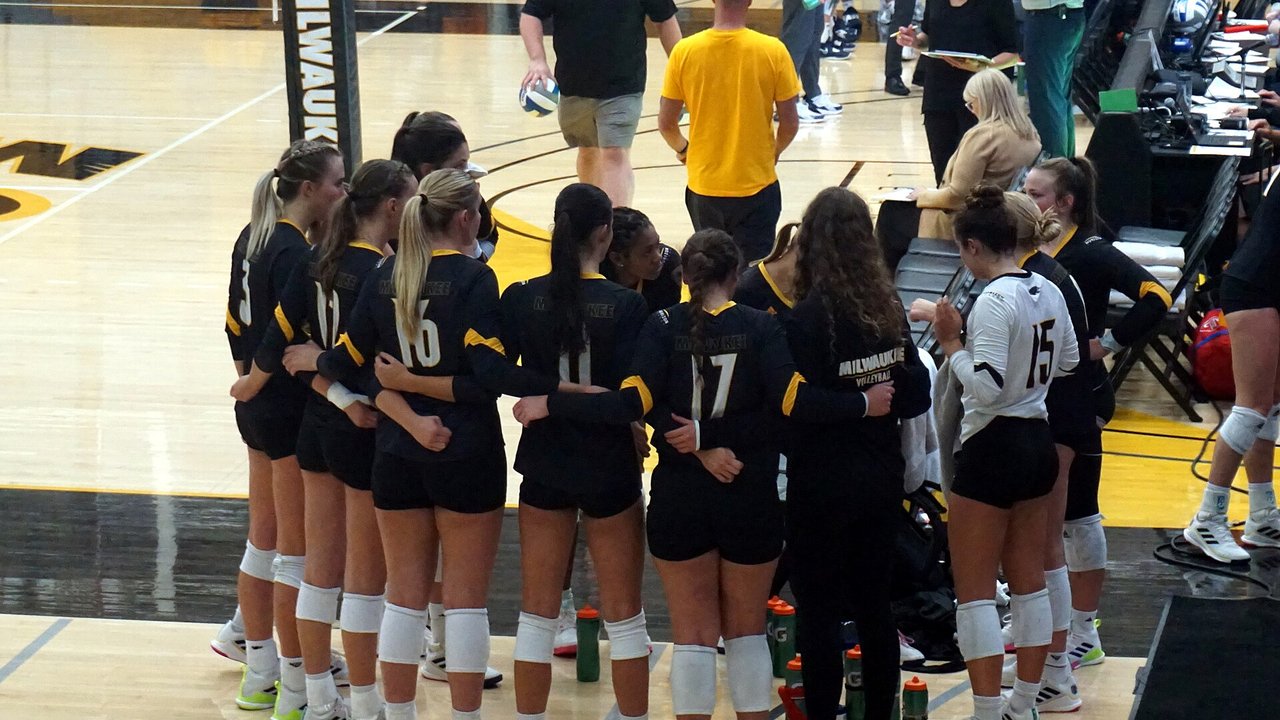
A college coach’s inbox on a Monday after a big club weekend looks a lot like a serve-receive drill gone wrong: everything coming at once, most of it shanked. Your email does not need to be clever. It needs to be the one ball that lands perfectly on the target.
Here is how to write it, when to send it, and how to read the silence, which in Division I is often the rules talking, not the coach.
Primary sources: NCAA Division I Bylaw 13.4.1 (recruiting materials and electronic correspondence), USA Volleyball’s College Recruitment Timeline, and NCAA.org: How Recruiting Works.
Not compliance advice. Rules change, and a school’s compliance office has the final word. This page tells you which questions to ask.
Related: Recruiting timeline · How to make a recruiting film · Official vs. unofficial visits · D1 vs D2 vs D3
The one rule that changes everything
You can email any coach, at any level, at any age. USA Volleyball puts it plainly: there are no restrictions on when a recruit can communicate with college coaches. Email, text, direct message, voicemail, all fair game.
The coach is the one with the rulebook. What a coach can send back depends on the division and your grade:
| Level | When the coach can write back about recruiting | What that means for your email |
|---|---|---|
| NCAA Division I | June 15 after your sophomore year. Bylaw 13.4.1 bars recruiting materials, athletics correspondence and electronic correspondence before then. Phone calls follow the same date, and in volleyball a DI staff member may not even take your call before it. | Email early anyway. The coach can read it, watch your film and come see you play. Expect silence, a camp flyer or a questionnaire, not a personal reply. |
| NCAA Division II | June 15 after your sophomore year for direct communication, per USA Volleyball. | Same playbook as DI. Confirm with the school if you are unsure. |
| NCAA Division III | No timing restriction on recruiting materials or email under DIII’s version of Bylaw 13.4.1, as summarized in conference compliance guides like the CCIW quick reference (PDF). | A DIII coach can reply whenever. Many still focus on juniors and seniors because admission and academics drive the decision. |
| NAIA and junior college | Fewer restrictions, per USA Volleyball. | Same as DIII: write when you are ready; expect real conversation sooner. |
Two things are allowed earlier even in Division I. A school may send camp and clinic information and recruiting questionnaires at any time, per the NCAA’s Division I Bylaw 13 compliance guidance (PDF), though a questionnaire sent before June 15 cannot pitch the program. So if a sophomore gets a camp email back from a DI coach after writing in, that is not a brush-off. That is about as much as the coach is allowed to say.
And one door is always open: USA Volleyball notes that college coaches at every level can talk to your club or high school coach. That is why the club coach’s name and email belong in every message you send.
What to put in the email
Coaches read on phones between practice and film. Write for a thumb and a five-second glance.
The subject line does the most work
Lead with the facts a coach sorts by: graduation year, position, height, club team and where they can see you next.
EXAMPLE subject: 2029 OH, 6-0, [Club] 16 Elite, playing at [Event] Court 14, Sat 9am
Names, events and courts here are placeholders. Use your real ones.
The body, top to bottom
- One personal line. Why this school, specifically. Their system, their major, a match you watched. If the line would work for any other school, rewrite it.
- Who you are in one sentence. Name, grad year, position, height, club team and high school.
- The film link, high up. A link, not an attachment. Put the highlight and full-match film in the first few lines so it is a single tap.
- Where to see you live. Your next events, with dates, divisions and your team name as it appears on the schedule.
- Academics. GPA, intended major if you have one, and your NCAA Eligibility Center ID if you are on the DI or DII path. The NCAA notes coaches can confirm whether you are registered.
- Your club coach’s name, email and phone. The open door from above.
- A short sign-off with your own email and phone.
Six to ten short lines is plenty. Coaches have been known to watch the film before they finish the email; make that easy.
An example to copy the shape of
Everything in brackets is a placeholder, and the player is fictional. Keep the shape; make every line yours.
EXAMPLE
Subject: 2029 OH, 6-0, [Club] 16 Elite, [Event] Court 14, Sat 9am
Coach [Last name],
I watched your five-set match against [Opponent] and loved how often your outsides were set out of serve receive. That is the system I want to play in, and [School]’s [Major] program is at the top of my list.
I’m [First Last], a 2029 outside hitter (6-0) for [Club] 16 Elite and [High School].
Highlights + two full matches: [link]
Next events: [Event], [dates], 16 Open, Court 14 Saturday 9am. Then [Event], [dates].
GPA [x.xx] unweighted. NCAA Eligibility Center ID [number].
Club coach: [Name], [email], [phone].
Thank you for your time, [First Last] · [email] · [phone]
Timing, follow-ups and how many schools
- Send it yourself. NCAA.org advises that parents often lead the process in 9th and 10th grade, but by 11th and 12th grade students should take ownership and lead communication. Coaches notice who is writing. Use an email address you will still check in two years, and make it your name, not your gamer tag.
- One school per email. No group sends, no visible list of 40 coaches in the “To” line. Address the head coach and the recruiting coordinator if the staff page lists one.
- Follow up around events, not on a timer. A short note a week before a tournament (“Here’s my court and time”) and one after (“Updated film from Saturday”) gives a coach a reason to look again.
- Write before June 15, not just after. For DI and DII it puts your name in front of the staff before they are allowed to answer, so your inbox is ready when the date hits. Note the coach still cannot reply with recruiting content until then.
- Fill out the questionnaire too. Most programs post one on their athletics site. It is the form a coach is allowed to send you early, so beat them to it.
- Match the list to reality. Use the D1 vs D2 vs D3 guide to build a list across levels. A list of only national-title programs is a wish list, not a plan.
What not to do
- Do not exaggerate. If you list a block touch or approach, it should be a measured number. A coach who sees you play will know in one rotation.
- Do not attach a 400 MB video. Link it.
- Do not copy and paste the wrong school’s name. It happens more than you would think, and it is the one mistake a coach always remembers.
- Do not read a non-reply as a no. For DI and DII before June 15 after sophomore year, it is often the rule, not the coach. After that date, a non-reply is information, and a polite follow-up after your next event is fair.
Questions to ask once a coach writes back
- “Where do I fit on your recruiting board for my class and position?”
- “What would you like to see from me at my next event?”
- “When are you planning visits for my class?” (DI visits cannot happen until Aug. 1 before junior year, per USA Volleyball; see official vs. unofficial visits.)
- “Who in compliance should my family talk to about the rules for my grade?”
Keep going
- Recruiting Timeline for Women’s Volleyball
- How to Make a Recruiting Film
- Official vs. Unofficial Visits
- Academic Eligibility, the Short Version
- Club vs. College Volleyball and How to Choose a Club
- The JUCO Path into NCAA Volleyball
- Player search, see who is on the rosters you are writing to
Sources
- NCAA Division I Bylaw 13.4.1, LSDBi: no recruiting materials, general athletics correspondence or electronic correspondence to an individual or family before June 15 at the conclusion of the sophomore year of high school.
- NCAA Division I telephone-call bylaws, LSDBi (Bylaw 13.1.3): calls may not be made before June 15 after sophomore year, and in sports other than baseball, basketball, football, lacrosse, men’s ice hockey, softball and men’s wrestling, staff may not receive calls from the individual or family before that date.
- NCAA Division I Bylaw 13 compliance presentation (PDF): camp and clinic information and questionnaires may be provided at any time; content limits on questionnaires before the correspondence date.
- USA Volleyball, College Recruitment Timeline: no restrictions on recruits contacting coaches; DI and DII direct communication from June 15 after sophomore year; fewer restrictions in DIII, NAIA and NJCAA; college coaches may talk to club and high school coaches; DI visits from Aug. 1 before junior year.
- CCIW Division III recruiting quick reference (PDF): DIII Bylaw 13.4.1 places no restrictions on the timing of recruiting materials or the number or timing of emails.
- NCAA.org, How Recruiting Works: communication rules vary by division and grade; coaches can confirm Eligibility Center registration; students should lead communication by 11th and 12th grade.
Writing tips on this page (subject lines, length, follow-ups) are coaching-craft advice, not NCAA rules. Coaches’ preferences vary; when a program states how it wants to be contacted, do it their way.