Academic Eligibility, the Short Version
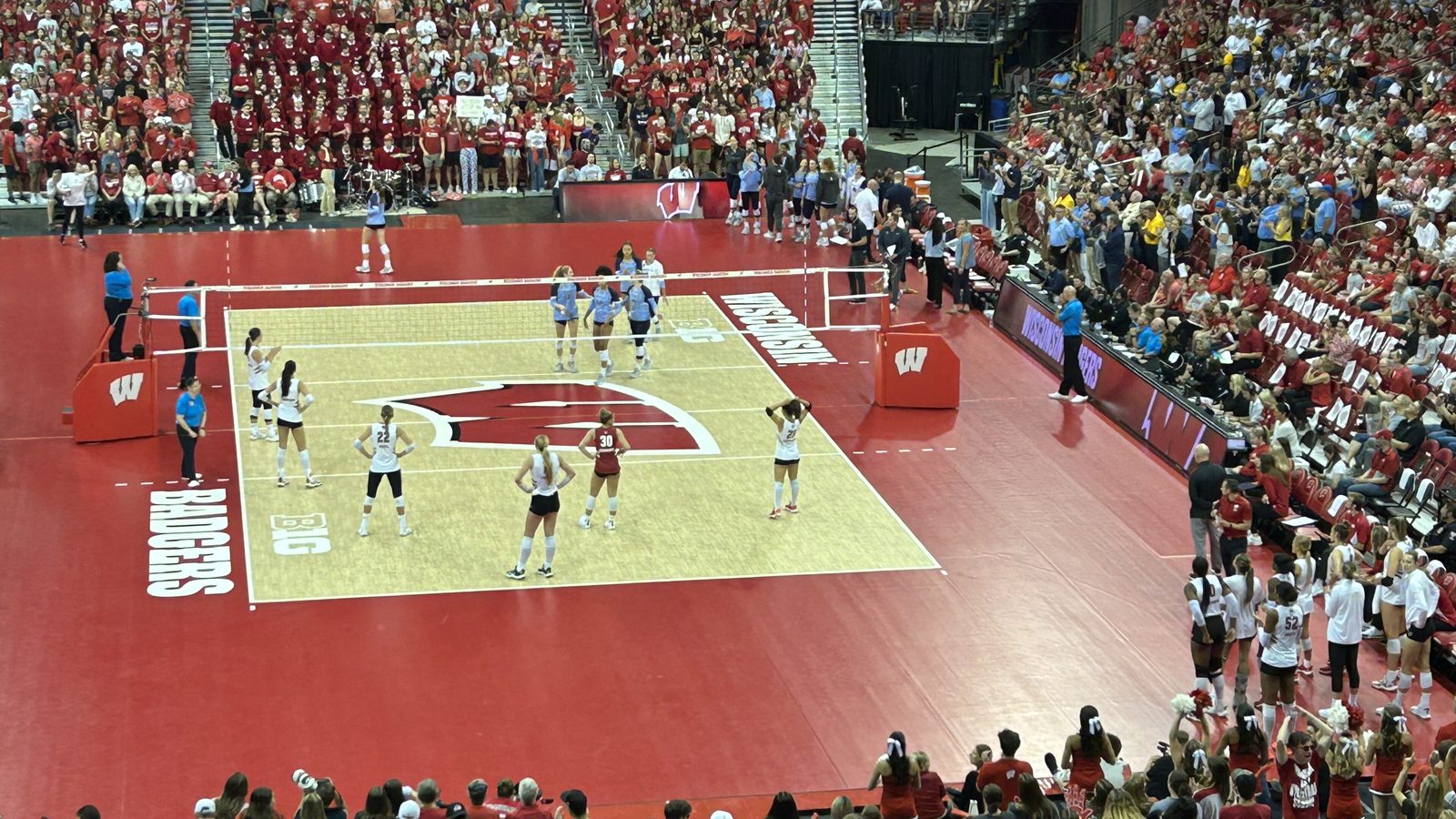
The highlight reel gets the official visit. The transcript gets her on the court.
Every year, talented volleyball players lose a season, or a scholarship, not to a better outside hitter but to a missing English credit or a sophomore-year GPA nobody was watching. The rules are not complicated once you see them on one page. This is that page.
Primary sources: NCAA Division I Initial Eligibility Requirements, NCAA Division II Initial Eligibility Requirements, Division I Academics: Staying Eligible, Division II Academics, and the Division I Cabinet report, June 23–24, 2026 (PDF).
Not compliance advice. The NCAA Eligibility Center certifies DI and DII recruits, and your school’s compliance office runs everything after that. Use this page to know what to ask.
Related: Redshirt and medical hardship (2026 changes) · D1 vs D2 vs D3 volleyball · Recruiting timeline · Transfer portal · Scholarship types
The one-table answer
| Division I | Division II | Division III | |
|---|---|---|---|
| Who certifies her as a recruit? | NCAA Eligibility Center | NCAA Eligibility Center | The school, on campus (the Eligibility Center certifies only international DIII athletes’ amateur status) |
| Core courses | 16 | 16 | School’s own admission standards |
| Minimum core-course GPA | 2.3 | 2.2 | School sets it |
| Timing rule | 10/7: 10 core courses, 7 in English, math or science, before the 7th semester | None listed | — |
| SAT/ACT required by the NCAA? | No (removed for anyone enrolling on or after Aug. 1, 2023) | No | — |
| Proof of graduation | Final official transcript uploaded by the counselor | Same | School admission |
Sources: NCAA Eligibility Center DI and DII requirement pages; 2026–27 Guide for the College-Bound Student-Athlete (PDF); 2026–27 High School Counselor Guide (PDF).
The 16 core courses
“Core course” is an NCAA term, not a school term. A class counts only if it is on your high school’s NCAA-approved course list, which you can search in the Eligibility Center’s High School Portal. Plenty of honest, useful classes, from weight training to most electives, do not count.
| Subject | Division I | Division II |
|---|---|---|
| English (or native language) | 4 years | 3 years |
| Math (Algebra I or higher) | 3 years | 2 years |
| Natural or physical science | 2 years | 2 years |
| Additional English, math or science | 1 year | 3 years |
| Social science | 2 years | 2 years |
| Additional core (any area above, world language, comparative religion or philosophy) | 4 years | 4 years |
| Total | 16 | 16 |
One update worth knowing: the June 2026 DI Cabinet report lists Proposal No. 2026-35 as adopted, eliminating the natural or physical science lab requirement from the DI qualifier and academic redshirt core-course rules. The two years of science still count; the lab-specific condition is what went away. Confirm with the Eligibility Center how it applies to your graduating class.
Division I also expects those 16 courses in eight semesters, four consecutive years from the start of ninth grade. Graduating early does not shrink the list. A DI student who graduates on time may use one additional approved core course taken within a year after graduation and before full-time college enrollment.
The DI 10/7 rule, the one that sneaks up on people
Before her seventh semester (the start of senior year), a Division I recruit must have completed 10 of her 16 core courses, and 7 of those 10 must be English, math or science. Per the NCAA’s DI fact sheet, once the seventh semester starts, any course used to meet 10/7 cannot be replaced or repeated to raise the GPA.
Translation for a sophomore: the grades you are earning right now are the ones that get locked in. A C in geometry can be fixed in tenth grade. In twelfth grade, for 10/7 purposes, it is permanent.
Students with solely international academic credentials are not held to 10/7.
What happens with the GPA you actually have
The Eligibility Center computes a core-course GPA from approved core courses only. Then it sorts DI recruits into one of three outcomes, per the NCAA’s Division I academic standards fact sheet:
| DI status | What it means for year one |
|---|---|
| Qualifier (16 core courses, 10/7, 2.3+ core GPA, graduated) | Can practice, compete and receive an athletics scholarship |
| Academic redshirt (graduated, 16 core courses, at least a 2.0 core GPA) | Can receive an athletics scholarship all year and practice in the first term, but cannot compete in year one. She must pass nine semester or eight quarter hours to keep practicing the next term |
| Nonqualifier | Cannot practice, compete or receive an athletics scholarship in year one |
There is also an early academic qualifier path for DI students who meet set criteria after six semesters; the NCAA’s 2022 academic committee report described it as 14 core units with a 3.0 core GPA under the test-optional standards.
The 2026 twist: an academic redshirt year now costs more
Here is where academic eligibility collides with the 2026 age-based eligibility model. In Divisions I and II, an athlete now gets one continuous five-year window, and the NCAA’s Eligibility 101 page says that window does not pause because she does not compete or sits out.
So the math changed. Under the old system, an academic redshirt year was a year she could not play, but it did not eat one of her four seasons. Under the age-based model, that year runs on the same five-year clock as every other year. Read it plainly: a recruit who arrives as an academic redshirt is likely looking at four playable seasons instead of five. Athletes enrolling for the first time in 2026–27 may still choose the old rules if they help more, but the class of 2027 and later is age-based only. Ask compliance to run your exact case.
Test scores: gone, mostly
In January 2023, Divisions I and II removed SAT and ACT scores from NCAA initial eligibility for anyone enrolling full time on or after Aug. 1, 2023. The NCAA’s guides add a fair warning: a college may still want scores for admission or academic scholarships. Check each school on your list.
Staying eligible once she is on campus
Initial eligibility gets her through the door. After that, the bar resets every term.
Division I (from the NCAA’s Division I academics summary and Bylaw 14):
- Credit hours: at least six credit hours each term to be eligible the next term, and 18 semester or 27 quarter hours over the academic year to be eligible the next year. The NCAA notes there are some sport-specific requirements, and Bylaw 14 also carries an annual-credit rule, so let compliance confirm the full set.
- Percentage of degree: 40% of her specific degree program done before year three, 60% before year four, 80% before year five. It is measured against the degree program, not just the major, and she must declare a degree program by the start of year three.
- GPA: a minimum cumulative GPA tied to her school’s GPA standard for graduation.
Division II (from the NCAA’s Division II academics page):
- 24 semester or 36 quarter hours each academic year, with at least 18 semester or 27 quarter hours between the start of fall classes and spring commencement.
- At least nine semester or eight quarter hours each full-time term.
- A 2.0 cumulative GPA to stay eligible for competition.
Division III: the school sets and certifies its own academic standards. Ask the coach or compliance office for the written policy.
If she transfers
Academic eligibility follows a player into the portal. Per the NCAA’s Division I academics page, a four-year transfer must have been academically eligible at her previous school to be immediately eligible for competition and athletics aid at the new one, and transfers must meet progress-toward-degree benchmarks at the time of transfer.
For two-year college and 4-2-4 transfers, Division I adopted Proposal No. 2026-40 in June 2026, effective immediately. The NCAA’s May 2026 academics committee report described the change: the transferable GPA requirement drops from 2.500 to 2.000, certain credit-hour thresholds go away, and progress-toward-degree rules still apply. See the May 2026 DI Academics and Eligibility Committee report (PDF).
A grade-by-grade checklist for volleyball families
- Ninth grade: pull up your high school’s NCAA-approved core-course list and plan four years against it with your counselor.
- Tenth grade: create a free Eligibility Center Profile Page. Treat every core grade as permanent, because for 10/7 purposes many of them will be.
- Eleventh grade: if DI or DII is a real possibility, upgrade to the Academic and Athletics Certification account, have your counselor send a transcript, and finish the 10/7 courses before senior year.
- Twelfth grade: finish the last core courses, then have your counselor upload the final official transcript with proof of graduation. Watch the “Tasks” in your Eligibility Center account until certification is complete.
- In college: meet with compliance each term about credit hours, percentage of degree and GPA, and about which eligibility model (old or age-based) applies to you.
Keep going
- Redshirt and Medical Hardship: What Changed in 2026
- D1 vs D2 vs D3 Volleyball
- Recruiting Timeline for Women’s Volleyball and Official vs Unofficial Visits
- Transfer Portal and Graduate Transfers
- Scholarship Types, Explained
- Player search, any player across Divisions I, II and III
Sources
- NCAA Division I Initial Eligibility Requirements: 16 core courses and DI distribution, 10/7, 2.3 core GPA, on-time graduation and the one additional core course.
- NCAA Division II Initial Eligibility Requirements: 16 core courses and DII distribution, 2.2 core GPA.
- 2026–27 Guide for the College-Bound Student-Athlete (PDF) and 2026–27 High School Counselor Guide (PDF): eight-semester rule, test-score removal for enrollees on or after Aug. 1, 2023, DIII certification on campus.
- NCAA Division I Academic Standards fact sheet (PDF): 10/7 courses cannot be replaced or repeated after the seventh semester; early academic qualifier, academic redshirt and nonqualifier outcomes.
- NCAA Division I Committee on Academics report, February 2022 (PDF): qualifier, early academic qualifier and academic redshirt standards without test scores.
- Report of the NCAA Division I Cabinet, June 23–24, 2026 (PDF): Proposal Nos. 2026-35 (science lab requirement eliminated), 2026-40 (two-year and 4-2-4 transfers) and 2026-44 (age-based eligibility).
- NCAA Division I Academics and Eligibility Committee report, May 8, 2026 (PDF): two-year transfer GPA from 2.500 to 2.000.
- Division I Academics: Staying Eligible and NCAA Bylaw 14.4.3.2 (LSDBi): six hours per term, 18/27 hours per year, 40/60/80 percent of degree, transfer academic eligibility.
- Division II Academics: 24/36 annual hours, 18/27 in the regular year, nine/eight per term, 2.0 cumulative GPA.
- NCAA Division I and II Age-Based Eligibility Rules: Eligibility 101: the five-year window does not pause for sitting out.
Rules change, and 2026 proved it. Before you build a senior-year schedule or sign anything, confirm the current standard with the NCAA Eligibility Center (877-262-1492) and the compliance office at each school recruiting you.