Substitutions, Explained
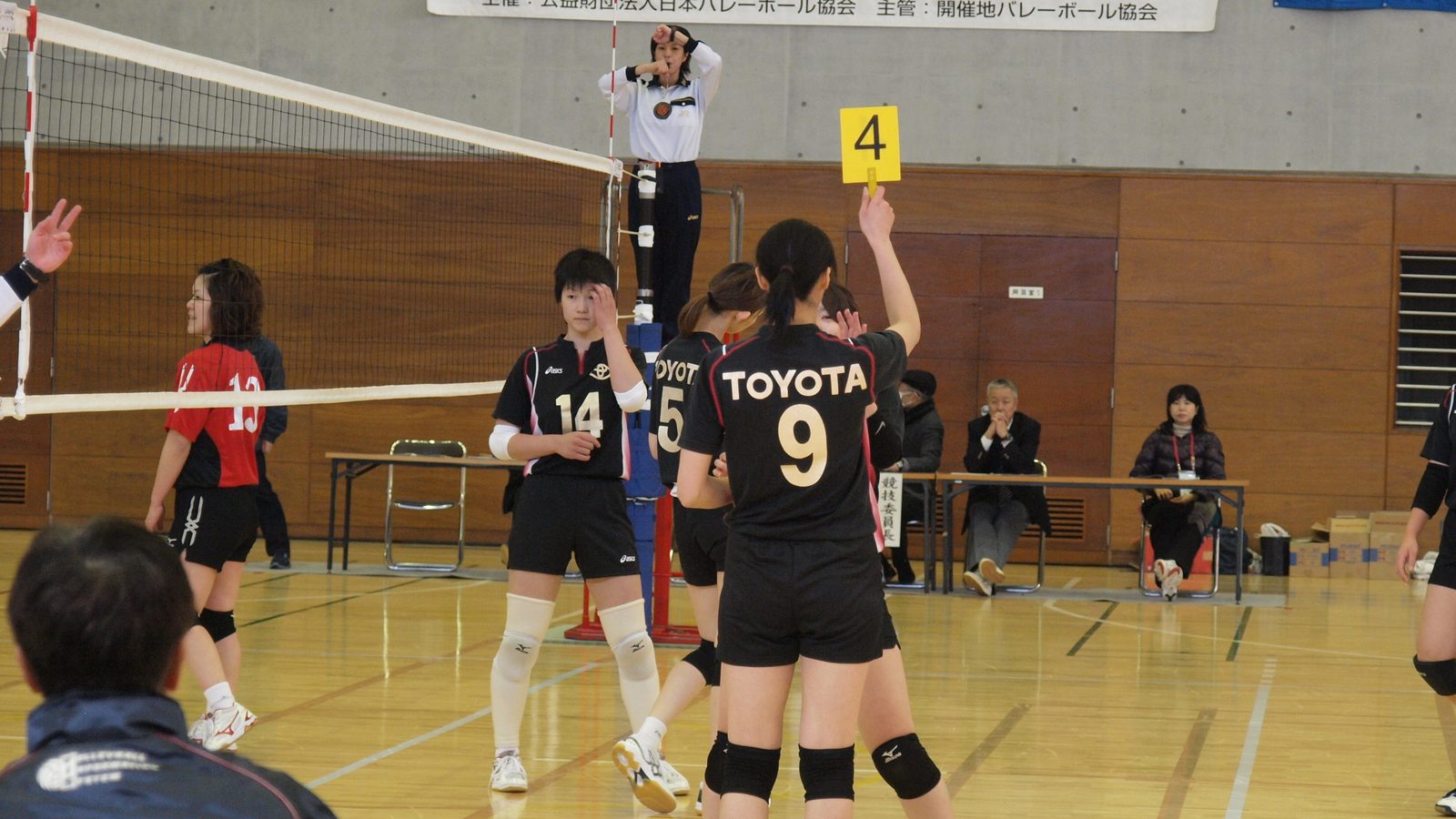
Watch the bench side of the court for one set and you’ll see a quiet second match being played. A hitter rotates to the back row and jogs off. A defender in the same jersey jogs on. Three rotations later, they trade back. Late in a tight set, a coach suddenly doesn’t make that swap, and the people who know why are the ones counting.
Every substitution costs something, the budget is fixed, and a player who comes back has to come back to the exact spot she left. This guide covers how NCAA women’s volleyball substitutions work under the current rules book: how many a team gets, who can ask, when, what goes wrong, what happens when someone gets hurt, and why the libero lives under a separate set of rules. It is a rules explainer. It doesn’t rank coaches or grade anybody’s bench.
Primary source: the 2026 and 2027 NCAA Women’s Volleyball Rules and Interpretations (PDF), linked from the NCAA Women’s Volleyball Playing Rules hub. Rule numbers below cite that book, and “Situation” refers to its Rule 11 interpretations section. The Division II and III limit change comes from the 2026 and 2027 Divisions II and III Rules Changes (PDF).
The cheat sheet
| Question | Answer | Rule |
|---|---|---|
| How many subs per set? | 15 in Division I, 18 in Divisions II and III | 11.3.2.1–11.3.2.2 |
| How many times can one player go in? | Unlimited, inside the team limit | 11.3.2.1–11.3.2.2 |
| What counts as one sub? | Every legal entry by a player (exceptional subs excepted) | 11.3.2.3 |
| Can a returning player switch spots? | No. She goes back to her original place in the serving order | 11.3.2.4 |
| When can a team sub? | Before a set starts, or after a completed rally, before service is authorized | 10.1.1.8, 11.3.3.1–11.3.3.2 |
| Who can ask? | A coach in the bench or warmup area, or the playing captain | 11.3.3.2 |
| Do libero swaps count? | No. Libero replacements and exchanges are unlimited and aren’t substitutions | 12.2.1.2.2 |
| What if someone’s hurt and there’s no legal sub left? | An exceptional substitution, which doesn’t count against the limit | 11.3.6 |
The budget: 15 or 18 per set
In Division I, each team gets 15 substitutions per set (Rule 11.3.2.1). In Divisions II and III, it’s 18 per set (Rule 11.3.2.2). Within that limit, any player may enter as many times as the coach likes.
The DII/DIII number is new. It was 15 across the board before the 2026–27 book. The Divisions II and III committee raised it to 18, and its stated rationale is short and sensible: more student-athletes get to play, and coaches get room to be more creative with lineups.
The sentence that makes the budget bite is Rule 11.3.2.3: each player entering the set legally counts as one team substitution. It’s counted per entry, not per player and not per swap. So the most common move in the sport, a defensive specialist subbing for a hitter and later giving the spot back, costs two:
- The hitter rotates to the back row and the specialist checks in. That’s one.
- The hitter rotates back to the front and checks back in. That’s two.
Labeled arithmetic, not a claim about any team: a Division I coach who runs three of those round trips in a set has spent 6 of her 15. Add a serving specialist in and out twice, and she’s at 10, with five left for injuries, a late-set blocker, or a cold hitter. A Division II or III coach in the same spot has eight left. That gap is exactly the “creative lineups” room the committee was talking about.
Ask for one too many, a 16th in DI or a 19th in DII/DIII, and the request is denied and charged as an improper request (Rules 11.3.2.3, 6.2.2.5).
The budget resets every set. Unused subs don’t carry over.
The service-order lock
This is the rule casual fans miss most often. Any number of players may enter at a given spot in the service order, but a player who re-enters the set must return to her original position in the serving order in relation to her teammates. No player’s service-order position can change unless an injury forces it (Rule 11.3.2.4).
In plain terms: when a starter leaves, her spot in the rotation is still hers. If she comes back in that set, she comes back to that spot. A coach can’t pull the starting setter, re-route her into a different rotation, and slide her back in somewhere handier.
That’s why substitution patterns in college volleyball look so structured. Each sub is a choice about one slot in a fixed six-person rotation (Rule 10.2 says the rotation order set by the starting lineup must be kept for the whole set). For a refresher on how that rotation works, see How a Rally Is Scored.
When a team can sub
Substitutions are allowed before the start of a set or after a completed rally (Rule 11.3.3.1). A rally is completed when a point is awarded to either team (Rule 8.1.3.1). The request has to come while the ball is out of play and before the first referee authorizes the next service (Rule 11.3.3.2).
The “completed rally” part matters more than it sounds:
- A replay is not a completed rally. If play is stopped for a stray ball or ball-crew interference and the rally is replayed, a substitution request before the replay isn’t allowed (Situation 7).
- A penalty point after a finished rally is fine. If a rally ends and a penalty point is then awarded, the rally was already over, so either team can still sub (Situation 8).
- A forced rotation counts. A team made to rotate by something other than a completed rally, such as an opponent’s disqualification during a rally, may still request a sub (Rule 11.3.3.1; Situation 11).
- Injuries are the big exception. If a serious injury stops a rally, the injured player’s team may substitute for that player before the replay (Rule 11.3.5.1; Situation 9). It can’t use the moment to swap somebody else (Situation 10).
Before the first serve. Players on the lineup sheet (except a libero) can be substituted before play starts (Rule 10.1.1.8). For the first set, the lineup can be changed without using a sub until the one-minute mark of prematch warmups. After that, and for every later set once the sheet is in, changing a starter costs a substitution (Rule 10.1.1.7).
Who asks, and how
After the set starts, only a coach positioned in the bench or warmup area or the playing captain can request a substitution, verbally or with the official hand signal (Rule 11.3.3.2). If any other team member asks out loud, the request is denied and an improper request is assessed (Rule 11.3.3.2.2).
There’s a shortcut most fans never notice: if the incoming substitute walks into the substitution zone, that is the request. Nobody else has to say a word (Rule 11.3.3.2.1).
The substitution zone is the area bounded by the extensions of both attack lines, the sideline, and the score table (Rule 1.3.2). All substitutions happen there (Rule 11.3.4.1). Then:
- One pair at a time. Multiple subs go in one after another, and only one substitute may be in the zone at a time (Rule 11.3.4.2).
- Wait for the second referee. The outgoing player and the substitute wait near the sideline until the second referee authorizes the entry. Step on early and the sub is denied, with a delay sanction (Rule 11.3.4.3).
- Be ready. At the moment of the request, the substitute has to be ready to go. A sub that isn’t completed right away is denied and draws a delay sanction (Rule 11.3.3.3). A long gap between incoming subs limits the team to the ones that were on time (Rule 11.3.3.4).
One request per dead ball, except around timeouts
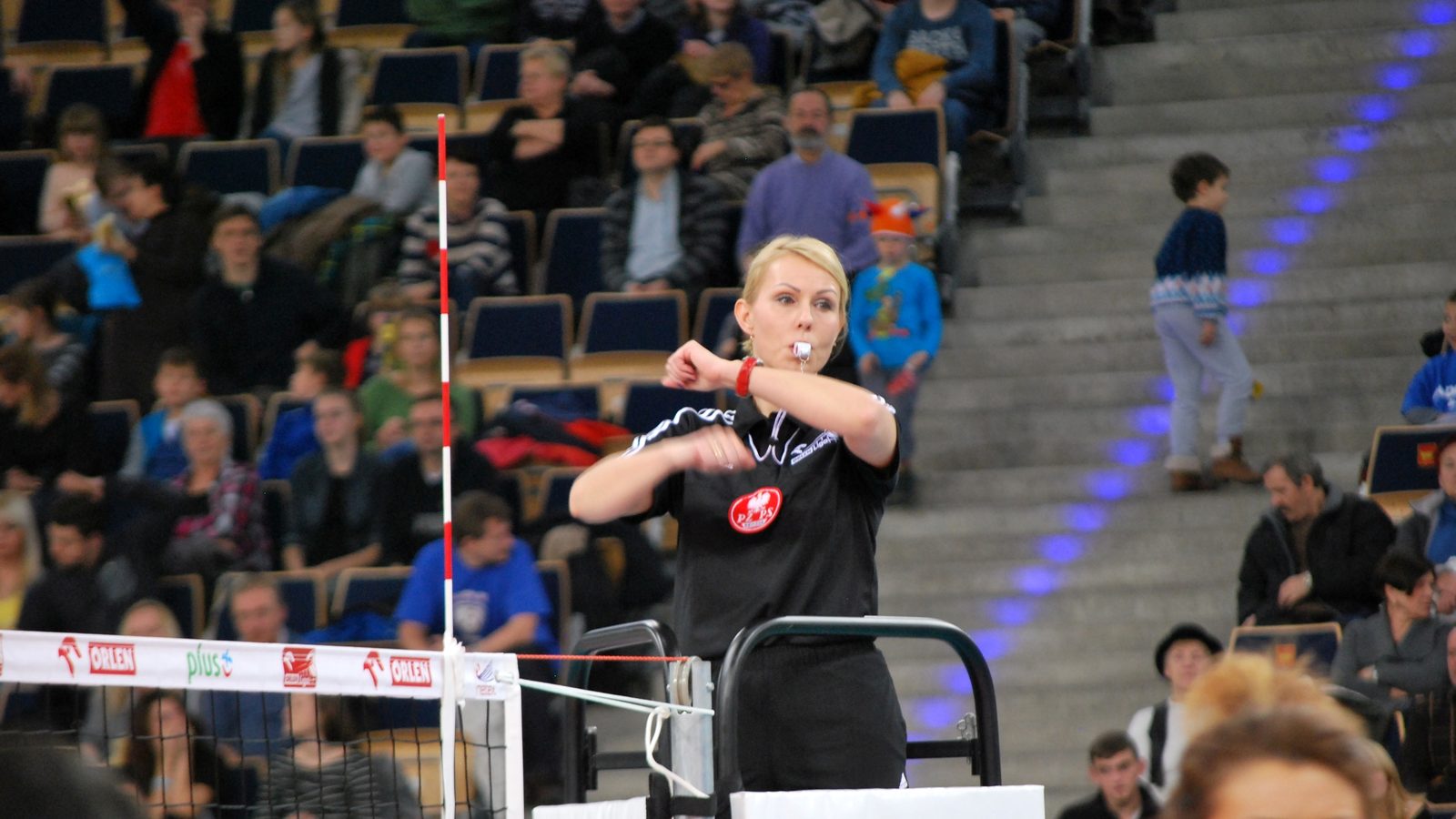
A team can’t request back-to-back substitution interruptions. It has to wait for the next completed rally or for a timeout granted to either team (Rule 11.3.3.2.6). One request can include several players, though.
Timeouts open the window. During a timeout, either team may request any number of substitutions, and immediately after a timeout a team may request one more. Every request made right before, during, or right after a timeout is carried out at the end of the timeout (Rule 11.3.3.2.6). The six players who were on the court when the timeout was called go back out first. Then the subs and libero swaps happen (Rule 11.2.5.2; Situation 4).
That’s why you’ll often see a coach call timeout and then make two or three changes at once. It’s the cleanest way to reshape the floor without burning several dead balls.
When it goes wrong
| What happened | What the referees do | Rule |
|---|---|---|
| First improper request of the set (wrong person asks, asks too late, asks after a replay, asks for an excess or illegal sub) | Denied and noted on the scoresheet, with no further penalty | 6.2.2, 6.2.3.1 |
| Second and later improper requests in a set | Delay sanction | 6.2.3.1, 6.3.2.1 |
| An improper request the referee has already whistled | Delay sanction | 6.2.3.3, 6.3.2.2 |
| Sub not completed, or a sub steps on early | Sub denied, delay sanction, and no new sub request until the next completed rally or a timeout | 6.3.2.4, 6.3.3.1 |
| Delay sanctions in general | The first in a set is a yellow-card warning. The second and later ones are a red-card penalty plus loss of rally | 6.3.3.2 |
| A player enters in the wrong service-order spot and the serve happens | Position fault: loss of rally, players put back in place, and the subs charged for the wrong entry are wiped off the scoresheet | 10.3.2, 10.3.2.2 |
The wrong-spot case is the sneaky one. If the illegal entry is caught before the serve, it’s an improper request. If play has already started with a player illegally on the court, it becomes a position fault instead (Rule 6.2.3.3). How many points come off depends on who was serving and when the error was caught (Rules 10.3.2.3–10.3.2.5).
The rules book walks through one case (Situation 8 under Rule 10). A substitute enters in the wrong service position, her team serves two points and then loses a rally, the opponent serves a point, and only then is the error found. The fix: the original player returns, the sub is cancelled, the two earlier points stand because the opponent has already served, and no extra point is awarded because the opponent just scored.
Injuries and the exceptional substitution
If a serious injury happens during a rally, the referees stop play and the rally is replayed. If the player can’t resume within 30 seconds, she must be replaced by a legal sub or a legal libero replacement, or her team must take a legal timeout if she’s going to keep playing. If the referees are told within about 30 seconds that she’ll be replaced, no timeout is charged, however long it takes to get her off the floor safely (Rule 11.3.5.1). Her team can’t make other sub requests until the injury is resolved (Rule 11.3.5.2).
When a team has no legal substitution available, because the budget is spent or the service-order lock leaves no eligible player, the rules allow an exceptional substitution (Rule 11.3.6.1):
- It doesn’t count against the 15 or 18 (Rule 11.3.6.1.1; Situation 15).
- There’s a priority order for who replaces the injured player: first a player who already played that spot or a substitute who hasn’t been in the set yet, then any substitute on the bench, and finally a libero, who then has to switch to the regular team uniform with a unique number (Rule 11.3.6.1.2).
- The injured player is done for that set, and the player who comes in as an exceptional sub can’t be subbed out again that set unless she is hurt too (Rule 11.3.6.1.3).
- It isn’t allowed for a disqualified player. A disqualified player has to be replaced by a legal substitution. If no legal sub is possible, the team is declared incomplete and the match is defaulted (Rule 11.3.6.1 and the note under Rule 6).
If no legal or exceptional sub can be made, the first referee grants a special injury timeout of up to three minutes, once per player per match. If the player still can’t go after that and any remaining team timeouts, the team is declared incomplete and defaults the set, keeping its points (Rule 11.3.6.1.4).
Blood rule: a bleeding player, or one with blood on her uniform, leaves the court. If the uniform can’t be changed in reasonable time, the team must make a legal sub or take a legal timeout (Rule 11.3.7.3).
The libero is not a substitution
The libero, the player in the contrasting jersey, comes and goes under Rule 12, not Rule 11:
- Libero replacements and exchanges aren’t counted as substitutions, and they’re unlimited, with at least one completed rally between two libero replacements, apart from a few listed exceptions (Rule 12.2.1.2.2).
- She enters and leaves along the sideline in front of her team bench, between the attack line and the end line, not through the substitution zone (Rule 12.2.2.3).
- A libero on the court can only be replaced by the regular player she originally replaced in that position, or by an exchange with the team’s other designated libero (Rules 12.2.1.2.1, 12.2.1.3).
- No libero replacements or exchanges during a timeout (Rule 12.2.2.2).
If a libero gets hurt and can’t continue, she’s replaced by the regular player she came in for, or exchanged with the second libero. If that regular player comes back in for her, the team gets one substitution for that player only. A coach can also designate a new libero, but the injured one is out for the set (Rules 11.3.5.3–11.3.5.5).
The cost difference is the whole reason teams use both a libero and a defensive specialist. The libero is free to rotate in and out but can’t attack a ball that’s entirely above the top of the net, and can’t block. The DS is a regular player with no such limits, but every entry spends a sub. More on the libero’s restrictions in our libero position guide.
What subs mean on a box score
The NCAA statistics manual has a rule that quietly changes per-set numbers: when a player enters a set, she’s credited with participating in it. It doesn’t matter if she only played the front row or only the back row. That set counts toward every per-set category, even where her totals are zero (NCAA Official Volleyball Statistics Rules, 2022 PDF, Section 6).
Labeled example, not a real player: a serving specialist who checks in for one rotation in each of four sets and serves two aces has played four sets for stats purposes, so her aces per set is 2 ÷ 4 = 0.50. A starter who served the same two aces over a four-set match has the same 0.50. Per-set stats treat a cameo and a full set the same, so a sub’s numbers can look a little odd, high or low, next to a starter’s. See Digs, Blocks, and Aces and How to Read a Volleyball Box Score for the rest of the math.
How to watch for it
- Watch the hitter at the back-row turn. When an outside or middle rotates from the front row to the back, glance at the substitution zone by the score table. A teammate waiting there in the regular jersey means a sub is coming.
- Spot the serving specialist. A player who checks in right as her team gets the serve, serves, and heads back to the bench later is usually there mainly for her serve.
- Count late in sets. As a DI team gets close to 15 (or a DII/DIII team gets close to 18), the usual round trips start to disappear. A hitter staying on in the back row at 22–22 is often a sign the coach has been counting.
- Watch timeouts. Several changes at once after a timeout is a coach using the timeout window on purpose.
- Don’t count the libero. Her trips on and off the court are free and unlimited.
Five bleacher arguments, settled
- “She came back in a different spot. Is that legal?” No. A returning player must go back to her original position in the service order unless an injury forces a change (Rule 11.3.2.4).
- “They used two subs on one player. That’s one sub.” It’s two. Every legal entry counts (Rule 11.3.2.3).
- “The libero has been on and off ten times. They must be out of subs.” Libero replacements aren’t substitutions and don’t touch the limit (Rule 12.2.1.2.2).
- “Coach, sub now, a ball just rolled onto the court and they replayed it!” No sub after a replay, because there’s no completed rally. The injured-player exception is the only way around that (Rule 11.3.3.1; Situations 7, 9).
- “DII gets more subs than DI now?” Yes. For 2026 and 2027, Divisions II and III get 18 per set and Division I stays at 15 (Rules 11.3.2.1–11.3.2.2).
Keep going
- Defensive Specialist Position Guide, the role that uses the most subs
- Libero Position Guide, the role that uses none
- How a Rally Is Scored, which covers rotation, serving order, and timeouts
- How to Watch Women’s College Volleyball
- Player search, to look up any player across Divisions I, II, and III
Sources
- 2026 and 2027 NCAA Women’s Volleyball Rules and Interpretations (PDF): Rules 1.3.2 (substitution zone), 6.2 (improper requests), 6.3 (delay sanctions), 8.1.3.1 (completed rally), 10.1.1.7–10.1.1.8 (lineup changes and pre-start subs), 10.2 (rotation order), 10.3.2 (position faults), 11.2.5.2 (after a timeout), 11.3 (substitutions, injuries, exceptional subs, blood), 12.2 (libero replacements and exchanges), and the Rule 10 and Rule 11 interpretation situations cited above.
- 2026 and 2027 Divisions II and III Women’s Volleyball Rules Changes (PDF): Rule 11.3.2.1 proposal raising substitutions per set from 15 to 18, with rationale.
- NCAA Official Volleyball Statistics Rules (2022 PDF): Section 6, participation and per-set calculations.
- NCAA Women’s Volleyball Playing Rules hub
Rules run on a two-year cycle. Before you settle a big argument with a rule number, check the NCAA playing rules hub for the current book.