Serve Receive for New Watchers
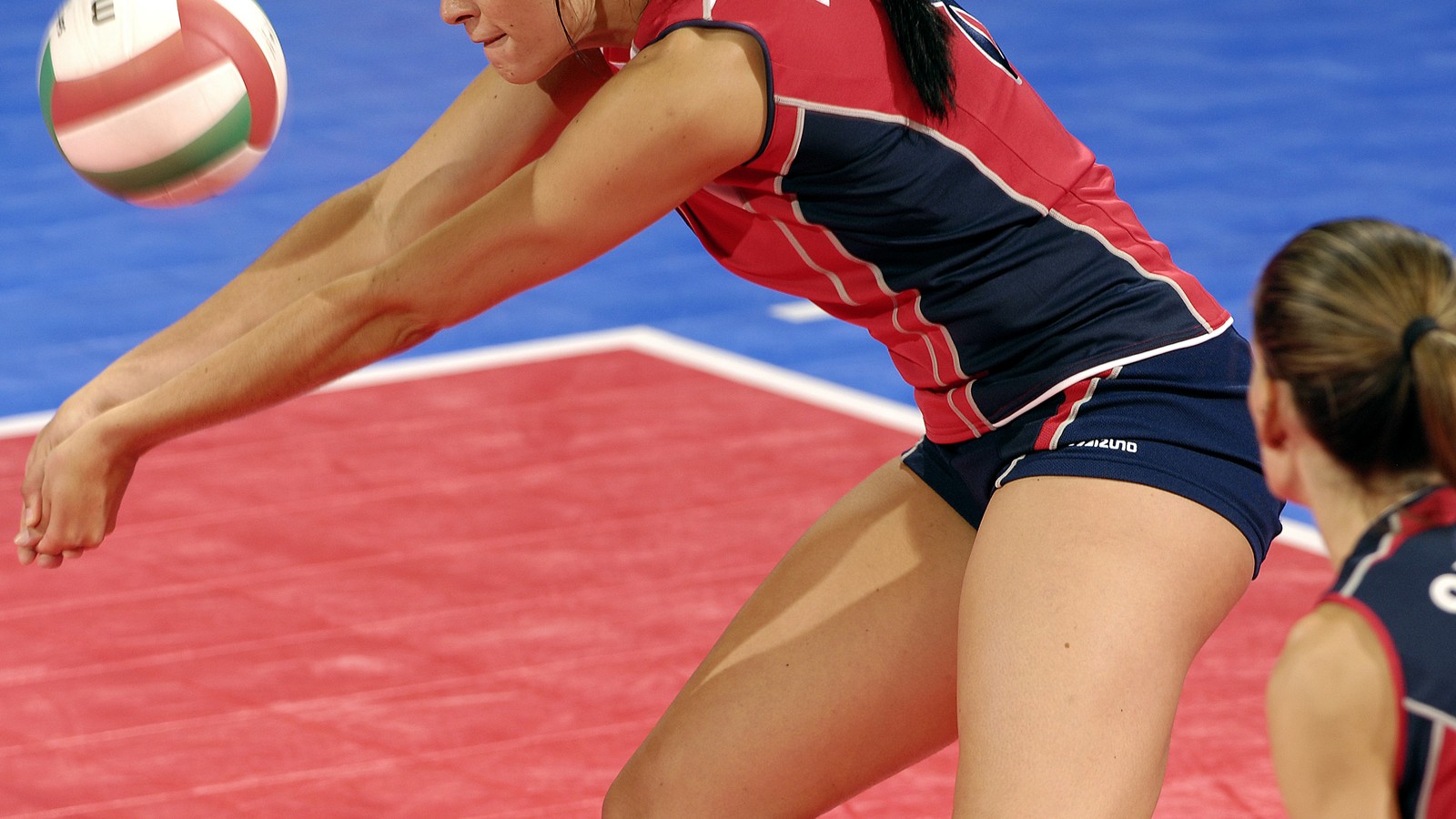
The loudest play in volleyball is the kill. The most important one is often quieter: a forearm pass that floats to the setter like it knew the address.
That first contact after a serve is serve receive. When it is clean, the setter has choices and hitters look inevitable. When it is not, the whole gym knows before the ball even comes back over. This guide is for new fans watching women’s college volleyball who want to understand what they are seeing on that first touch: what the rules protect, what the box score counts, who usually takes the ball, and how to watch it without needing a coach’s headset.
Primary sources: the 2026 and 2027 NCAA Women’s Volleyball Rules and Interpretations (PDF), linked from the NCAA Women’s Volleyball Playing Rules hub, and the NCAA Official Volleyball Statistics Rules (2022 PDF) for how aces, reception errors, and digs are credited. “Rule” citations point to the 2026–27 book; “Stats” citations point to the 2022 manual.
Related: How a rally is scored · Digs, blocks, and aces · Substitutions, explained · Libero position guide · Defensive specialist position guide · Setter position guide
The cheat sheet
| Question | Short answer | Source |
|---|---|---|
| What is serve receive? | The receiving team’s first contact on a legal serve | Fan term; see Stats 3.4 |
| Why does it matter? | A clean pass gives the setter options; a poor one turns the rally into a scramble | Coaching reality, not a rule number |
| Ace vs reception error | Every service ace (SA) has a matching reception error (RE) on the other side | Stats 3.2, 3.5, 3.7 |
| Dig vs serve receive | A dig is for an attacked ball kept in play. A serve is not an attack, so receive is never a dig | Stats 4.1; Rule 14.5.1 |
| Can you block or spike a serve? | No block on a serve (14.6.6). No attack on a serve in the front zone while the ball is entirely above the net (14.5.2) | Rules 14.5.2, 14.6.6 |
| Feet matter until contact | Players must be in correct positions when the server contacts the ball; after that they may move | Rules 10.3.1–10.3.2 |
| Screening | Serving-team players may not hide the serve; hands above the head until the ball crosses the net are illegal (2026–27) | Rule 13.2.4 |
What “serve receive” actually is
Coaches and broadcasters say serve receive (or just “receive” or “pass”). The NCAA statistics manual’s phrase is plainer: a serve reception is when a player “attacks to pass a successful serve attempt” (Stats Section 3, Article 4). In English: someone on the receiving team plays the served ball as the first of her team’s three contacts (Rule 14.1.1).
That first touch is the hinge of the rally. Volleyball awards a point on every completed rally (How a rally is scored). Starting that rally with a pass the setter can run with is how teams side out—fan language for winning the rally while receiving. The rules book does not grade pass quality. Your eyes do.
Platform, in plain English
You will hear commentators talk about a player’s platform: the flat surface made by locking the forearms together so the ball rebounds with some control. It is coaching vocabulary, not a term defined in the NCAA rules book. When the platform is quiet and the ball rises toward the setter near the net, fans call it a good pass. When the ball rockets over the net untouched on first contact, or skids into the seats, the gym feels it.
Do not treat “perfect / good / poor” pass ratings as official NCAA box-score columns. Many public NCAA box scores never show them. What the official scorer does track on receive is whether the serve became an ace—and therefore a reception error.
Aces, reception errors, and why digs are a different movie
This is the bookkeeping that settles bleacher arguments. Full detail lives in Digs, blocks, and aces; here is the receive-specific cut.
A service ace (SA) is “a serve that results directly in a point” (Stats Section 3, Article 2). It can be:
- The serve hits the court untouched.
- The serve is passed but cannot be kept in play.
- The referee calls a violation on the receiver (for example a lift).
- The receiving team is out of rotation (an overlap).
When one team gets an ace, the other team gets a reception error (RE) (Stats Section 3, Article 7). If the statistician cannot tell which passer was responsible—ball between two players, or the team was out of rotation—it is a team reception error (TRE) (Stats Section 3, Article 6). On a correct box score, Team A’s aces equal Team B’s reception errors, team errors included. That is Accuracy Check item 1 in the stats manual.
A reception error is charged only when an ace happens. A shaky pass that a teammate saves is not a reception error, even if the rally goes sideways later (Stats Section 3, A.R. 2 and A.R. 3).
And the line that confuses almost every new fan:
A dig is not a serve receive.
A dig is awarded when a player passes a ball that has been attacked by the opposition and it is kept in play (Stats Section 4, Article 1). The playing rules define an attack-hit as any action “other than a block or a serve” that directs the ball toward the opponent (Rule 14.5.1). So the first contact on a serve lives in the reception columns. Digs belong to defense against swings, dumps, and tips.
Two rules that force the forearm game
- You cannot block a serve. It is a fault (Rule 14.6.6).
- You cannot complete an attack-hit on the opponent’s serve while the ball is in the front zone and entirely above the top of the net (Rule 14.5.2).
The serve gets a protected trip over the net. Passers play it with forearms or hands and work it to the setter. That is why receive looks so different from a dig against a full approach swing.
Labeled EXAMPLE only (not a real player)
| Player | SA (as server) | SE | RE (as passer) | DIG |
|---|---|---|---|---|
| Example Libero | 0 | 0 | 1 | 14 |
| Example Outside | 2 | 3 | 2 | 8 |
Reading the EXAMPLE: the libero’s night is almost all defense and receive—fourteen digs against attacks, one reception error when a serve she was responsible for became an ace. Digs and reception errors are different columns for a reason. The outside’s two aces as a server must be mirrored by two reception errors somewhere on the other team’s sheet (individual or team).
Who stands where: formations fans see
Before the whistle, the receiving team spreads into a pattern coaches design and fans recognize. The NCAA rules book does not prescribe “three-person receive” or name a formation. It only requires six players in correct positions at the moment of service contact (Rules 10.2.1, 10.3.1). What you see from the stands is coaching craft layered on top of those position rules.
Common patterns, described the way broadcasters talk about them:
- Three-person receive. Three primary passers (often the libero and two pin hitters or a DS) take most of the court. The other three players pull out of the main passing lanes so they can transition to hit or set.
- Libero in the middle of the passing. The contrasting jersey is frequently the best passer on the floor; coaches put her where the serve is most likely to go.
- Setter hidden or releasing. In many offenses the setter starts in a spot where she does not take the first ball, so she can run the second contact. When she does have to take first contact, the offense is already off-script.
After the server contacts the ball, players may leave those starting spots (Rule 10.3.1.2). That is why a passer can take three hard steps to a short serve the instant the ball leaves the server’s hand.
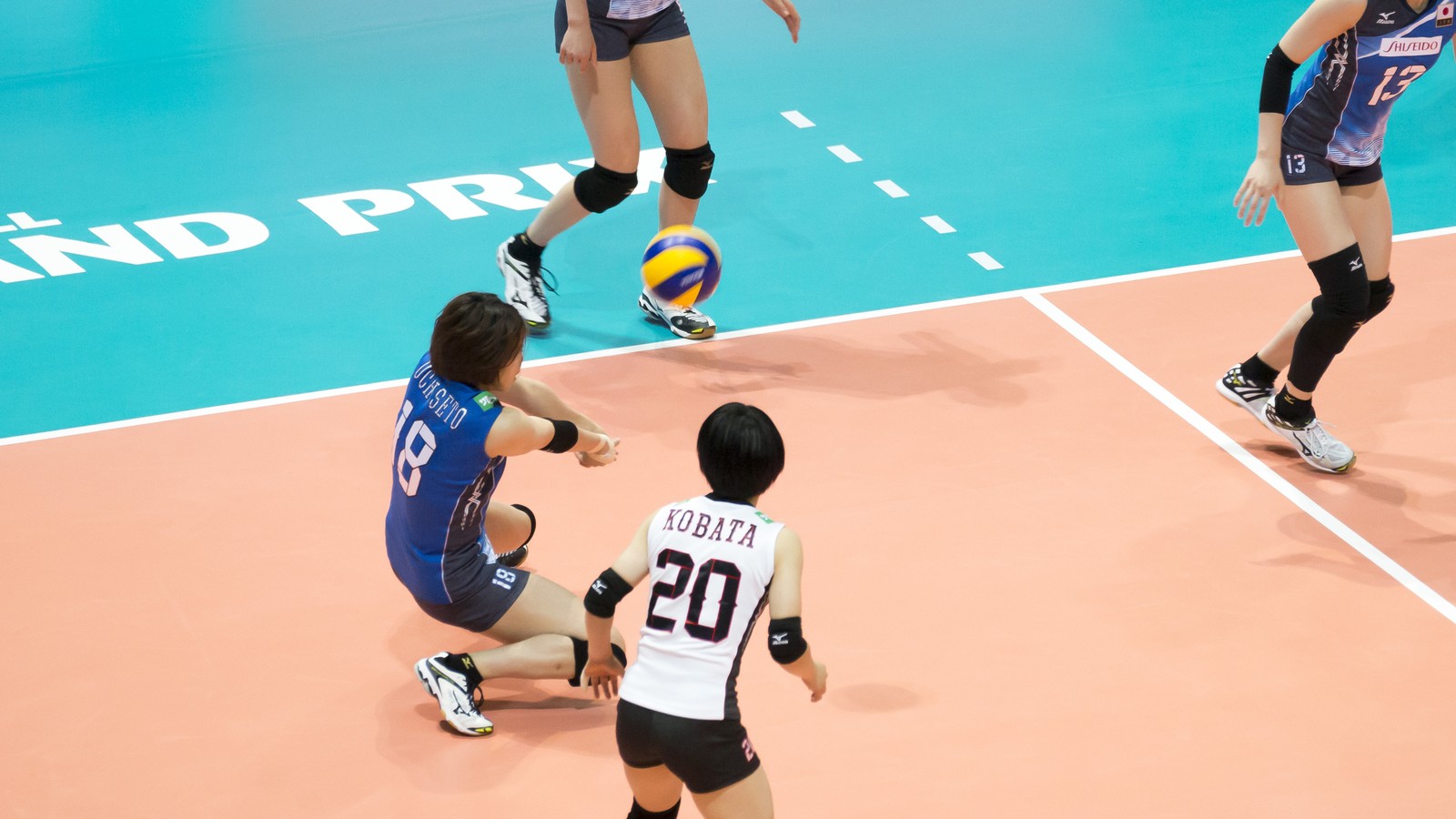
Libero and defensive specialist on the first contact
The libero is the contrasting-jersey back-row specialist. She is restricted to back-row play, may not complete an attack-hit on a ball entirely above the net, and may not block or attempt to block (Rules 12.1.2.1–12.1.2.2). Her replacements are not substitutions and are unlimited, with limits on timing (Rule 12.2.1.2.2). Serve receive is a huge part of why she exists.
The defensive specialist wears the regular jersey and enters through the substitution zone under the normal sub budget—15 per set in Division I, 18 in Divisions II and III (Rules 11.3.2.1–11.3.2.2; see Substitutions, explained). Coaches often bring a DS in specifically to take a serve-receive lane away from a weaker-passing hitter. Same job description as the libero on many first contacts; completely different rule cost.
Feet, overlaps, and the whistle that feels unfair
Serve receive is also a position test. At the instant the server contacts the ball, each team must be in two rows of three, with left/middle/right and front/back relationships judged by the feet (Rule 10.3.1.1). The server on the serving team is exempt from the court-position requirement; everyone else is not.
If the receiving team is out of those relationships when the serve is contacted, it is a position fault: loss of rally, players put back in place (Rules 10.3.2, 10.3.2.2). In the stats book, receiving out of rotation is one of the four ways to hand the server an ace (Stats Section 3, Article 2(4)), usually logged as a team reception error (Stats Section 3, Article 6(2)).
Fans call that an overlap. The rules book says position fault. Same whistle, different vocabulary.
Serving out of order is a separate animal—a rotation fault on the serving team (Rule 13.2.3)—and it shows up as a service error charged to the player who should have been serving (Stats Section 3, Article 3).
Screening and the serve rules that shape receive
Receive only happens if the serve is legal. A few serving rules change what passers see:
- Serving faults that lose the rally include the ball failing to cross through the legal crossing space, going under the net, touching a serving teammate, landing out, or passing over an individual or collective screen (Rule 13.2.1.1).
- Illegal service includes foot faults, throwing the ball, two-handed serves, failing to toss, catching a toss, and missing the eight-second clock (Rule 13.2.2.1).
- Screening (Rule 13.2.4): players on the serving team must not prevent receivers from seeing the contact of the serve and the path of the ball. New emphasis in the 2026–27 book: serving-team players may not raise their hands above their heads during the serve until the ball has passed beyond the net. Potential screens also include a teammate who jumps, waves, or moves sideways as the ball is served over her, or a tight cluster of two or more players with a fast, low serve going over them (Rules 13.2.4.1–13.2.4.2).
If you are watching receive and the first referee suddenly ends the rally before anyone passes, look at the serving team’s arms and spacing. The point may have been decided on their side of the net.
How to watch the first contact
- Find the contrasting jersey before the serve. The libero is usually one of the primary passers. Note who else shares the passing load—often an outside hitter or a DS in the regular jersey.
- Watch the ball meet the arms, not the spike approach. The quality of the next swing was mostly decided here.
- Grade the pass by what the setter can do. Ball to the setter near the net with time to choose a hitter: in system. Ball forced off the net or over the setter’s head: the offense is already improvising.
- Listen for the ace/RE pair. Untouched serve on the floor, shanked pass that dies, or an overlap whistle on the receiving team—all of those are aces with a reception error attached.
- Do not call a dig on a serve. If the public address or a graphic says “dig” on first contact after a serve, the graphic is wrong; the stats manual is not.
- Notice late-set DS swaps. When a coach burns a substitution to put a better passer in a lane, that is receive strategy under the sub budget (Substitutions, explained).
Five bleacher arguments, settled
| The claim | The ruling | Source |
|---|---|---|
| “She touched it, so it’s not an ace.” | If the pass cannot be kept in play, it is an ace—and a reception error | Stats 3.2(2), 3.5(2), 3.7 |
| “Great dig on that serve!” | No. Serve receive is not a dig; digs are for attacked balls | Stats 4.1; Rule 14.5.1 |
| “Why can’t she just spike the serve back?” | Attacking a serve in the front zone while it is entirely above the net is illegal; blocking a serve is illegal too | Rules 14.5.2, 14.6.6 |
| “They overlapped—whose point?” | Receiving-team position fault is loss of rally; stats treat it as an ace with a team reception error | Rules 10.3.2; Stats 3.2(4), 3.6 |
| “Their hands were up on the serve—is that legal now?” | Serving-team hands above the head until the ball crosses the net are not permitted under Rule 13.2.4 (2026–27) | Rule 13.2.4 |
Keep going
- How a Rally Is Scored, the rally, rotation, and scoring frame this page sits inside
- Digs, Blocks, and Aces, the full SA/SE/RE/DIG/block definitions
- Substitutions, Explained, the budget that makes DS receive swaps cost something
- Libero Position Guide and Defensive Specialist Position Guide, the two most common first-contact specialists
- Setter Position Guide, what a clean pass is for
- How to Watch Women’s College Volleyball
- Player search, any player across Divisions I, II, and III
Sources
- 2026 and 2027 NCAA Women’s Volleyball Rules and Interpretations (PDF): Rules 10.2–10.3 (rotation order, positions, position faults), 12.1–12.2 (libero restrictions and replacements), 13.2.1–13.2.4 (serving faults, illegal service, rotation faults, screening including the hands-above-head restriction), 14.1.1 (three team hits), 14.5.1–14.5.2 (attack-hit; attacking the serve), 14.6.6 (blocking the serve), and the Major Rules Changes note on 13.2.4.
- NCAA Official Volleyball Statistics Rules (2022 PDF): Section 3 (serves, service aces, service errors, serve reception, reception errors, team reception errors, A.R.s), Section 4 (digs; serve receive is not a dig), Section 6 and the Statistics Accuracy Check (aces must equal opponent reception errors).
- NCAA Women’s Volleyball Playing Rules hub
- College volleyball dictionary — NCAA.com
Rules run on a two-year cycle. Before you settle a big argument with a rule number, check the NCAA playing rules hub for the current book.