Defensive Specialist Position Guide
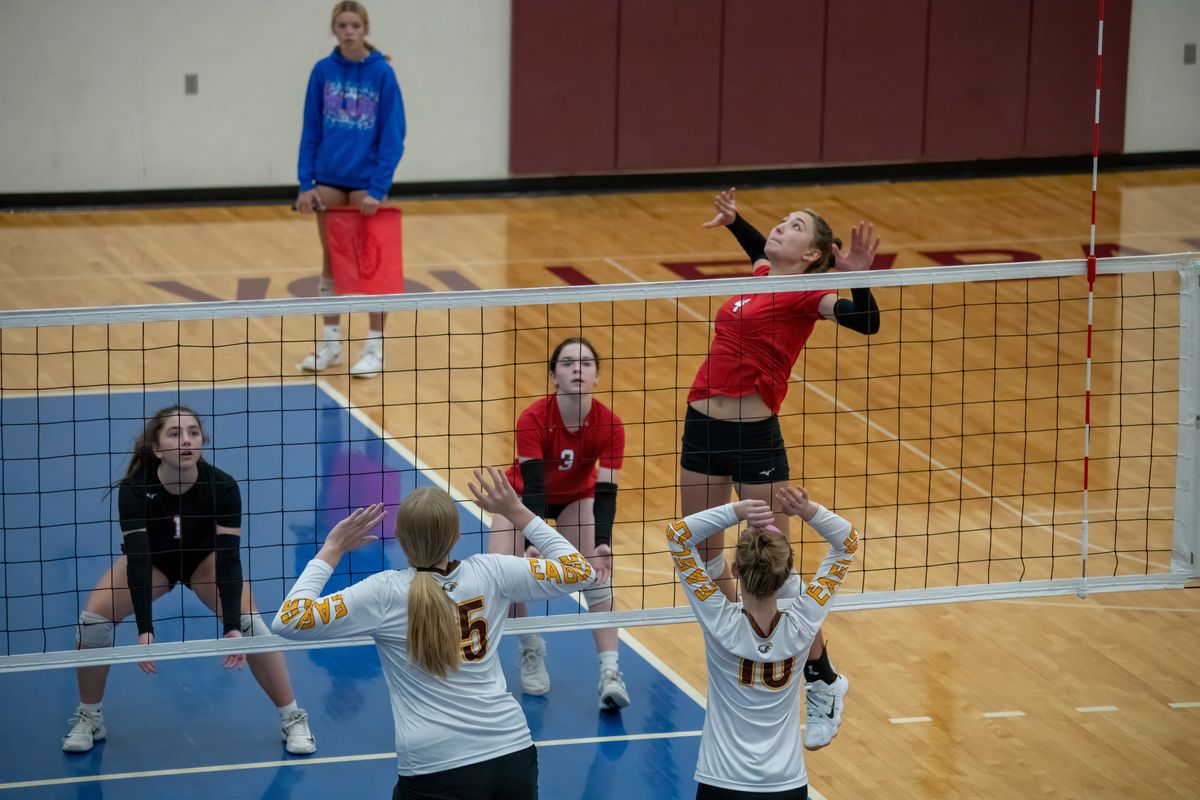
Every volleyball team has a player you will never see on a highlight reel’s thumbnail and will absolutely see in the coach’s film session. She checks in at the scorer’s table when a big hitter rotates to the back row. She wears the same jersey as everybody else. She passes the nastiest serve in the gym, peels a heavy cross-court swing off the floor, serves three tough balls, and then jogs back to the bench as the hitter returns to the net.
That is the defensive specialist—the DS. This guide teaches how the role works in NCAA women’s volleyball, how it differs from the libero, what it costs a coach in substitutions, and how to watch for it from the stands. It is not a ranking of defensive players, a recruiting board, or a projection.
Primary source: 2026 and 2027 NCAA Women’s Volleyball Rules and Interpretations (PDF), linked from the NCAA Women’s Volleyball Playing Rules hub. Rule numbers below cite that book. Also: NCAA.com volleyball dictionary · NCAA Official Volleyball Statistics Rules (2022 PDF) · USA Volleyball: Learn to Read the Hitter
Related: Libero position guide · Setter position guide · Outside hitter position guide · Opposite hitter position guide · Middle blocker position guide · How to read a box score
The one-sentence version
A defensive specialist is a regular player used as a back-row specialist. She plays under the normal substitution rules, wears the team uniform, and carries none of the libero’s special restrictions—or the libero’s special privileges.
Here is the quietly delightful part: the phrase “defensive specialist” does not appear anywhere in the NCAA rules book. The book defines the libero in detail (Rule 12). It never defines a DS. “DS” is a coaching role, not a rules category. To the officials, she is simply a substitute. Everything interesting about the position flows from that.
Spot one in 10 seconds
| Cue | What it means |
|---|---|
| Same jersey as the hitters | Teammates other than the libero must wear identical uniforms (Rule 7.1.2.1). If the defender is in the team color, she is not the libero. |
| Checks in through the substitution zone | Regular subs happen in the zone between the attack-line extensions, at the score-table side (Rules 1.3.2, 11.3.4.1). The libero uses her own lane in front of the bench, between the attack line and end line (Rule 12.2.2.3). |
| Arrives when a hitter rotates back | The classic pattern: a front-row attacker heads to the back row, the DS replaces her, and the attacker returns three rotations later. |
| Often goes straight to the service line | When she takes over the spot rotating into position No. 1, her first job is to serve. |
| Lives in passing lanes | Serve receive and digs—the same box-score columns you read for a libero. |
NCAA.com’s volleyball dictionary describes the role exactly this way: a DS plays the back row, handles defense and serve receive, does not wear a different-colored jersey, and abides by normal substitution rules—which is why she is typically in for three of the six rotations. Three rotations is the usual pattern, not a rule. Nothing stops a coach from leaving her on the floor longer.
DS vs libero: the cousins who play by different rules
The libero and the DS do overlapping work. The rules treat them as completely different creatures.
| Libero | Defensive specialist | |
|---|---|---|
| In the rules book? | Yes: Rule 12, “The Libero Player” | No. She is a regular player and substitute. |
| Jersey | Must clearly contrast with teammates (Rules 12.1.3.1, 7.1.3) | Identical to teammates (Rule 7.1.2.1) |
| How many? | Up to two may be designated per set on the lineup sheet; only one on the court at a time (Rules 12.1.1, 12.2.1.1) | No designation. Any regular player can fill the role. |
| Cost to enter | Libero replacements are not counted as substitutions and are unlimited, with at least one completed rally between replacements (Rule 12.2.1.2.2) | Every entry counts as one team substitution (Rule 11.3.2.3) |
| Front row? | Never. Restricted to the back row (Rule 12.1.2.1) | Allowed. If she rotates to the front row, she is a front-row player like anyone else. |
| Attack above the net? | Not from anywhere when the ball is entirely above the top of the net (Rule 12.1.2.1) | Same back-row attack rules as any back-row player (Rule 14.5.4). In the front row, no back-row restriction. |
| Block? | May not block or attempt to block (Rule 12.1.2.2) | May block when she is in the front row. Only front-row players may complete a block (Rule 14.6.1.2). |
| Overhand set from the front zone? | A teammate may not attack the ball above the net off a libero’s overhand finger set from the front zone (Rule 12.1.2.5) | No libero-style restriction |
| Serve? | Either libero may serve, but in one rotation only (Rules 12.1.2.3, 12.1.2.4) | Serves whenever her rotation spot reaches position No. 1 |
| Who can replace her? | Only the regular player she originally replaced, or an exchange with the other designated libero (Rules 12.2.1.2.1, 12.2.1.3) | Any legal substitution under Rule 11.3 |
One more wrinkle that confuses roster-readers: rosters often list athletes as “L/DS.” That means the athlete can do either job. In a given set, though, a player designated as libero cannot play as a regular player in that set (Rule 10.1.1.3, with narrow injury exceptions). Pick a lane, set by set.
Want the libero side in full? Read the Libero position guide.
Why coaches spend a substitution on a DS
If the libero enters for free, why would any coach pay for a DS? Because the libero can only be in one place at a time.
On many lineups, the libero covers the middle blockers’ back-row turns—the classic pattern NCAA.com walks through in its libero explainer (and see our middle blocker guide). That leaves other attackers—often an opposite or an outside hitter—facing three back-row rotations where their job is mostly passing, digging, and serving. If one of those hitters is a superb attacker but a shakier passer, the coach can swap in a DS who is the reverse: a ball-control artist who will never be asked to swing at the net.
The trade is simple to say and hard to manage:
- The upside. A better passer in serve receive, a sharper digger in defense, and often a tougher server.
- The bill. Substitutions, which are finite.
The substitution math
This is where the DS turns from “nice role” into strategy. The current NCAA rules book sets the limits:
| Division | Team substitutions per set | Rule |
|---|---|---|
| Division I | 15 | 11.3.2.1 |
| Divisions II and III | 18 | 11.3.2.2 (raised from 15, effective 2026) |
Within that team limit, each player may enter an unlimited number of times (Rules 11.3.2.1–11.3.2.2). The key sentence is Rule 11.3.2.3: each player entering the set legally counts as one substitution (exceptional injury substitutions excepted). A request for a 16th sub in DI, or a 19th in DII/DIII, is denied and treated as an improper request.
Now do the arithmetic on a classic DS cycle:
- The hitter rotates to the back row. The DS enters. That is one substitution.
- Three rotations later, her spot returns to the front row. The hitter re-enters. That is two.
So one full DS round trip costs two substitutions. Labeled arithmetic, not a claim about any team: a DI coach running two separate DS round trips in a set has spent 8 of her 15 before any injury, serving sub, or late-set tactical move. That is why you will sometimes see a coach leave a hitter on the floor in the back row late in a tight set. She has not forgotten the DS. She has been counting.
Two more rules make the DS a rotation-specific player:
- Service order is fixed. Players re-entering the set must return to their original position in the serving order relative to teammates; nobody’s spot in the service order changes except for injury (Rule 11.3.2.4). In practice, the DS steps into one specific spot in the rotation.
- Timing. Substitutions happen only while the ball is out of play, before the first referee authorizes service, and are requested by a coach or the playing captain. A substitute walking into the substitution zone counts as the request (Rules 11.3.3.1–11.3.3.2.1). Multiple subs go in one pair at a time (Rule 11.3.4.2).
The fuller story—exceptional substitutions, injury procedures, and the timeout window—has its own page: Substitutions, Explained.
What a great DS actually does
These are teaching roles, not scouting grades.
| Job | Why it matters |
|---|---|
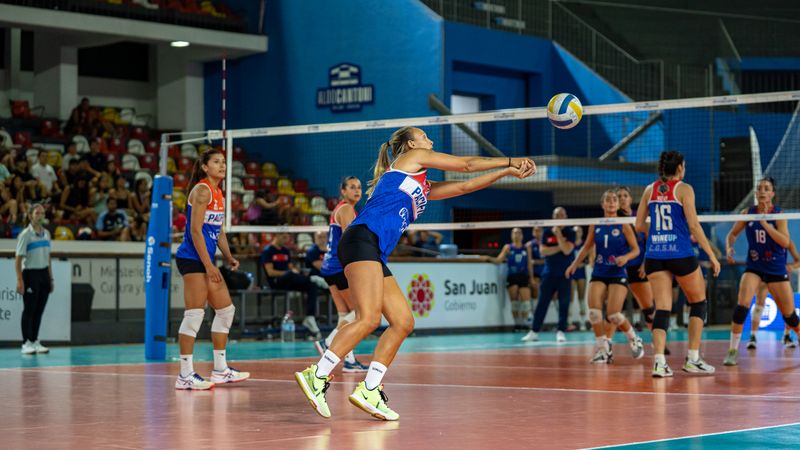
| Serve receive | The first contact decides whether the setter runs an in-system offense or scrambles. A DS often enters precisely to take a serve-receive lane away from a weaker passer. Fan primer: Serve receive for new watchers. |
| Digging | Turns the opponent’s best swing into your transition chance. |
| Reading the hitter | USA Volleyball’s defensive coaching guidance starts before the serve: check whether the opposing setter is front or back row, count the front-row hitters, then read the pass, the set, and the attacker’s approach angle and shoulders. A slow or partial approach is a red flag for an off-speed shot. |
| Serving | The DS takes the serve for whatever spot she occupies. Many coaches value a tough, reliable serve in that role. |
| Tip and off-speed coverage | Someone has to own the soft shot over the block. Often it is the DS. |
| Back-row communication | Calling seams, short serves, and “mine” early—so the libero, setter, and hitters aren’t guessing. |
Size is not the qualification. Footwork, platform control, nerve, and the ability to read a hitter’s shoulders are. Judging a DS by kills is like judging a goalkeeper by goals.
Back-row attack rules (yes, a DS can swing)
A DS is a back-row player while she is in the back row, so the standard back-row attack rules apply (Rule 14.5.4):
- A back-row player in the front zone may not complete an attack-hit when the ball is entirely above the top of the net at contact.
- She may attack if her takeoff is from behind the attack line (the 10-foot / 3-meter line)—she can land in front of it.
- She may attack from anywhere if any part of the ball is below the top of the net at contact.
- She may not block from the back row. Only front-row players can complete a block, and a back-row player participating in a completed collective block is a fault (Rules 14.6.1.2–14.6.1.3).
Unlike the libero, nothing in the rules forbids a DS from a back-row attack from behind the line. Whether a given coach asks a DS to do it is a coaching choice, not a rules question.
Serving: where a DS earns her minutes
The server is the player in position No. 1 (Rule 13.1.1). When a DS replaces the player rotating into that spot, she serves. A few current rules shape every service turn:
- The server must contact the ball within eight seconds of the first referee’s authorization (Rule 13.1.3.3).
- New for 2026: players on the serving team may not raise their hands above their heads during the serve until the ball has passed beyond the net. This is part of the screening rule (Rule 13.2.4), listed among the major rules changes for 2026 and 2027.
- The libero can serve in only one rotation per set. A DS has no such limit. She serves for whatever spot she holds.
Coaches also sometimes sub a player in mainly to serve—a “serving specialist.” The cost is the same: each entry is one substitution.
How to read a DS on the box score
Use the same columns you read for a libero (see How to read a box score). Definitions follow the NCAA Official Volleyball Statistics Rules:
| Stat | What it means for a DS |
|---|---|
| DIG | Awarded when a player passes a ball attacked by the opposition and it is kept in play. Not credited off a ball brought up from a block. |
| SA / SE | Service aces (a serve that results directly in a point) and service errors. A DS’s serving turn shows up here. |
| RE (if listed) | Reception errors: the serve hits the floor in her area, her pass can’t be kept in play, or she is called for a reception violation. |
| SP (sets played) | A DS may appear in many sets while playing only part of each. Per-set rates can mislead. |
| K / TA | Usually small. A DS isn’t on the floor to attack. |
| BS / BA | Usually zero, unless she rotates to the front row. |
EXAMPLE (labeled teaching numbers, not a real player):
| Player (EXAMPLE) | SP | DIG | SA | SE | RE | K |
|---|---|---|---|---|---|---|
| DS “D” | 4 | 9 | 1 | 1 | 0 | 0 |
| Outside “O” | 4 | 7 | 0 | 2 | 2 | 14 |
D’s line looks modest until you remember she only played the back-row half of the rotation, every set. Nine digs and zero reception errors in that window is a quietly excellent night. Many public box scores don’t show serve-receive pass ratings at all, so the real story—how many serves she passed perfectly to the setter—may not be on the page. Watch the match, then read the box.
Watching tips (fans, parents, players)
- Follow the team color, not just the contrasting jersey. When a hitter heads to the back row, glance at the score-table side of the court. If a teammate in the regular jersey is waiting in the substitution zone, that is your DS.
- Count the subs late in sets. If the scoreboard or broadcast shows substitutions used, track them. As DI teams approach 15 (or DII/DIII teams approach 18), DS patterns change. That is strategy, not neglect.
- Watch who the server is hunting. If a team keeps serving the same passer, the next substitution might be a DS taking that lane away.
- Find the server’s first step. A DS who enters into position No. 1 walks straight to the service line. Her serve is half the reason she is there.
- Rewind the sideout. After a big point, ask “who passed?” Often it was the libero or the DS, and the kill only happened because of it.
- Players: build film for the role. If you’re a DS prospect, show passing, digging, and serving reps. See How to make a recruiting film.
Spending your weekends on the floor? Our knee pads guide covers protection for the players who live there.
Sources
- 2026 and 2027 NCAA Women’s Volleyball Rules and Interpretations (PDF). Rules 1.3.2 (substitution zone), 7.1.2–7.1.3 (uniforms), 10.1.1.3 (libero designation), 10.2.1 (front/back row), 11.3 (substitutions: 15 DI / 18 DII–III per set), 12 (libero), 13.1–13.2.4 (service and screening), 14.5.4 (back-row attacker), 14.6.1 (blocking).
- NCAA Women’s Volleyball Playing Rules hub
- Changes to center-line faults approved in women’s volleyball — NCAA.org (Feb. 19, 2026) (DII/III substitutions to 18; serving-team hands rule)
- The college volleyball libero, explained — NCAA.com (Dec. 21, 2024) (libero covering middles)
- College volleyball dictionary — NCAA.com (defensive specialist, dig, pass)
- NCAA Official Volleyball Statistics Rules (2022 PDF) (digs, service aces, reception errors)
- So You Want to Be a Great Defender? Learn to Read the Hitter — USA Volleyball
Rules change on a two-year cycle, and interpretations can arrive mid-season. Check the current NCAA rules book on the playing rules hub before you settle a bleacher argument with a rule number.