NIL for Volleyball Players: The 2026 Guide
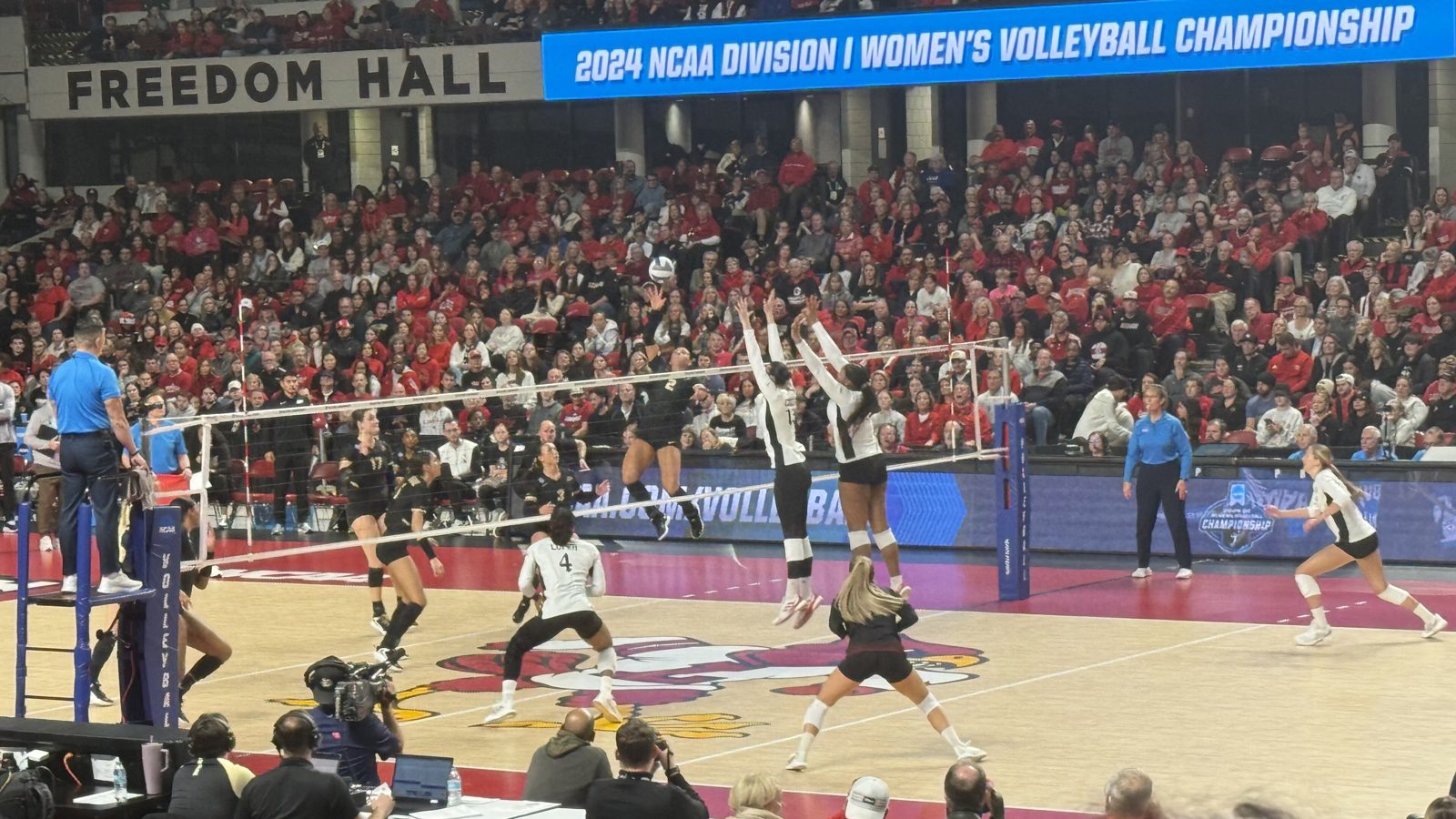
Volleyball sells out arenas now. So naturally, everyone’s group chat has an NIL opinion. This guide is the calm, sourced version for players, parents and fans: what NIL is, what changed with the House settlement, how reporting works, and how to say yes to the good stuff and no to the sketchy stuff.
Quick note: this is editorial education, not legal, tax or eligibility advice. Your school’s compliance office and your state’s law make the final call.
Want to know who’s “worth” what? See our Volleyball NIL Rankings page. Short version: nobody publishes a credible current volleyball list, and we say so plainly.
What NIL actually is
NIL stands for name, image and likeness. It means getting paid (cash, products or services) when a business uses who you are to promote something. Think a sponsored post, a camp you run, an autograph signing or a local commercial.
What it is not: pay for playing, pay for picking a school, or a reward for winning. The NCAA’s NIL hub is still the starting point.
The big shift: House v. NCAA and revenue sharing
On June 6, 2025, a federal judge gave final approval to the House v. NCAA settlement. Here’s what that changed:
- Schools can pay athletes directly. Starting July 1, 2025, schools that opt in can share revenue with athletes. That’s on top of scholarships and separate from outside NIL deals.
- There’s a school-wide cap. The 2025-26 cap was $20.5 million per school, based on 22% of average Power Four revenue (NCAA settlement Q&A). For 2026-27 it rose to about $21.58 million, according to court filings reported by ESPN.
- The cap covers every sport at the school, not each player. Most schools put most of that money into football and men’s basketball. Nobody is guaranteed a share, so read your actual offer.
- Opting in was common. ESPN reported that 319 schools opted in for the first year.
What it means for volleyball: roster limits replaced scholarship limits
Schools that opted in traded the old scholarship cap for roster limits. Under NCAA Bylaw 17.2:
- Women’s indoor volleyball is capped at 18 players.
- Beach volleyball is capped at 19.
- Men’s volleyball is capped at 18.
The upside is that a school can fund more than the old 12 full scholarships. The catch is that fewer walk-on spots exist.
Players who lost or would have lost a roster spot when the limits took effect could be named Designated Student-Athletes. They don’t count against the limit while they still have eligibility (NCAA Q&A).
For recruits, roster spots are tighter now. Ask every coach how many spots they have and how they fund scholarships.
The College Sports Commission and NIL Go
The settlement created a new enforcer, the College Sports Commission (CSC). It’s separate from the NCAA and runs NIL Go, a deal-reporting platform built with Deloitte.
- The $600 rule. Division I athletes must report outside NIL deals worth $600 or more. That includes smaller deals from the same payer that add up to $600. Free stuff counts too, like car leases or gym memberships (NIL Go FAQ).
- Five business days. New deals must be reported within five business days of signing.
- Three checks on every deal.
- Is the payer associated with your school?
- Is there a valid business purpose, meaning a real product or service sold to the public for profit?
- Is the pay within a reasonable range of compensation for someone like you?
- Collectives got squeezed. The CSC has said that a collective set up mainly to pay a school’s athletes doesn’t meet the valid-business-purpose test, even for appearances or merch (CSC memo, July 10, 2025).
- New 2026-27 thresholds. Starting July 1, 2026, deals with school-associated payers worth $600 to $15,000 skip the range-of-compensation review. That holds until an athlete’s associated deals pass $50,000 in an academic year. They still need a valid business purpose (CSC memo, June 23, 2026).
- Incoming players report too. High school recruits, JUCO transfers and DII/DIII transfers headed to Division I report past deals through NIL Go when they enroll. See our NIL basics page for the timing table and the CSC JUCO FAQ.
State law: Nebraska as the example
States still have their own NIL laws. Nebraska’s is the Nebraska Student-Athlete Name, Image, or Likeness Rights Act. It started as LB 962 in 2020 and was amended in 2022 and by LB 1393 in 2024. Highlights:
- No penalty for earning. Schools can’t bench an athlete for earning NIL money (§48-3603).
- Pay must be for real work. Contracts can’t run past an athlete’s college career, involve selling awards, or pay for work never done.
- Direct school payments have limits. A school can pay an athlete for NIL only when athletic-association rules, a court order or a settlement allows it. That’s how House-style revenue sharing fits in.
- Earning NIL doesn’t make you a school employee under the act.
- Disclosure is required. Athletes must tell a school-designated official about NIL contracts, and the school generally has to keep the terms private (§48-3604).
Playing somewhere else? Search your state legislature’s site for its NIL act, and ask compliance.
High school NIL: Nebraska (NSAA)
High school players at NSAA schools can do NIL, with guardrails. These come from an approved ruling effective Feb. 27, 2023 (NSAA ruling, NSAA FAQ).
Not allowed: - School uniforms, school gear, school facilities or school game film - Promotion during the school day or team activities - Money from the school, boosters or anyone tied to the school - Alcohol, tobacco, vaping, drugs, gambling or lottery sponsors
Allowed: - Wearing school colors you own in your own photos - Putting NIL money into a 529 college savings plan
The NSAA won’t review contracts. Talk to your school’s administration and your own counsel.
Other states set their own high school rules through their own associations. Check yours directly, because they vary a lot.
DII, DIII, NAIA and JUCO
- NCAA DII and DIII allow NIL, but not pay-for-play or recruiting inducements. Division II restricts how involved schools can be (NCAA DII guidance). The CSC’s NIL Go system and revenue sharing are Division I settlement tools.
- NAIA allows NIL from endorsements, appearances, social media, camps and autographs (NAIA NIL).
- NJCAA allows NIL for commercial promotion and appearances, as long as it doesn’t clash with school sponsorships. Schools can’t pay directly, can’t pay for performance and can’t use NIL as a recruiting pitch (NJCAA Handbook). Moving up to DI? Keep records, because those deals get reported later.
Taxes: yes, it’s income
Per the IRS NIL page:
- NIL income is generally taxable. That includes the fair market value of free gear, meals, travel and cars.
- Report it even without a form. You owe tax whether or not you get a 1099 or W-2.
- Most NIL pay is self-employment income. Independent-contractor pay usually goes on Schedule C, with self-employment tax and estimated payments.
- When a 1099-NEC shows up. Payers generally issue one for payments of $2,000 or more in 2026.
The IRS Taxpayer Advocate has athlete-friendly explainers. This isn’t tax advice, so hire a real tax pro before the money gets real.
Red flags (and agents)
Walk away, or at least call compliance, if you see any of these:
- “We’ll pay you to come here” or “just for being on the roster.” That’s pay-for-play.
- No deliverables. Money for using your NIL “later” with no defined posts, appearances or dates.
- Contracts that outlast your eligibility (Nebraska law bars them) or that sell off your NIL rights in bulk with no clear use. The CSC calls that last one “warehousing” (CSC memo, April 7, 2026).
- Sponsors your rules ban. In high school, that includes gambling, alcohol and vape brands. Volleyball Directory doesn’t do gambling content either.
- Agents who rush you. NCAA rules allow agents for NIL work. Get every agreement in writing, read the fee terms, and have compliance or an attorney review it before you sign.
How volleyball players actually earn
Volleyball NIL is mostly local and hands-on, not giant national contracts. The realistic menu:
- Camps, clinics and private lessons. Club kids want to learn from college players. NAIA and NCAA guidance both list camps as legit NIL.
- Social content. Sponsored posts and short videos for real brands, with clear deliverables.
- Local businesses. Coffee shops, car dealers, banks, gyms and restaurants. Hometown love is real.
- Appearances and autographs at events open to the public.
We won’t print “market rates” or rumored player earnings. Public deal values are rarely confirmed, and made-up numbers help nobody.
Checklist for families
- Read the NCAA NIL hub and your school’s NIL policy.
- Ask compliance how NIL Go and state disclosure work on campus.
- Get every deal in writing, with deliverables, dates and payment terms.
- Track every payment, even small ones, because same-payer totals cross $600 fast.
- Set aside money for taxes and talk to a tax pro.
- Never trade a recruiting decision for an NIL promise.
Related reading
- Volleyball NIL Rankings: What’s Published (and What Isn’t)
- NIL Basics for Women’s Volleyball
- Recruiting Timeline
- JUCO to NCAA Volleyball
- Transfer Portal Guide
- Redshirt and Medical Hardship
Sources
- NCAA Name, Image and Likeness
- NCAA DI House settlement Q&A (May 2026)
- NCAA Bylaw 17.2 roster limits
- ESPN: CSC filings on 2025-26 revenue sharing and 2026-27 cap
- CSC NIL Go FAQ
- CSC memo, July 10, 2025
- CSC memo, April 7, 2026
- CSC memo, June 23, 2026
- Neb. Rev. Stat. 48-3603 and 48-3604
- NSAA NIL approved ruling and FAQ
- NCAA DII institutional involvement in NIL
- NAIA NIL; NJCAA Handbook
- IRS: Name, image and likeness income