Volleyball Arm & Leg Sleeves Guide: Passing, Compression & Padded Options
Walk into any NCAA Division I arena or USAV National Qualifier and you will notice two unmistakable gear shifts over the last five years: passing arm sleeves on nearly every back-row defender, and full-length compression leg sleeves or graduated calf sleeves on front-row jumpers.
Whether you are a libero looking for a dry passing platform in set four or a middle blocker tired of thick knee pads bunching on a slide approach, here is how arm and leg sleeves work on the volleyball court—plus verified links to buy the most trusted models.
Why Volleyball Players Wear Arm Sleeves
1. Sweat Control on Serve-Receive
Bare skin gets slick with sweat by the middle of the second set. When a 50-mph jump-float or topspin serve hits a wet forearm, the ball skids instead of rebounding cleanly toward target. Seamless nylon/spandex sleeves (Mizuno DXS2, Nike Essential, Under Armour) wick moisture away from the forearm platform so ball contact feels identical in set five as it does in warmups.
2. Taking the Sting Off High-Velocity Serves
Even unpadded knit sleeves diffuse surface friction across the skin over the radius and ulna bones. For younger club passers or players running 200-ball serve-receive machines, padded forearm passing sleeves add a thin EVA or neoprene layer right above the wrist cuff to absorb impact.
3. Floor-Burn Protection on Pancake & Sprawl Digs
Sliding bare forearms across hardwood or Sport Court tiles creates instant friction burns. Sleeves let defenders extend horizontally across the floor without hesitation.
4. Single-Arm Compression for Hitters & Middles
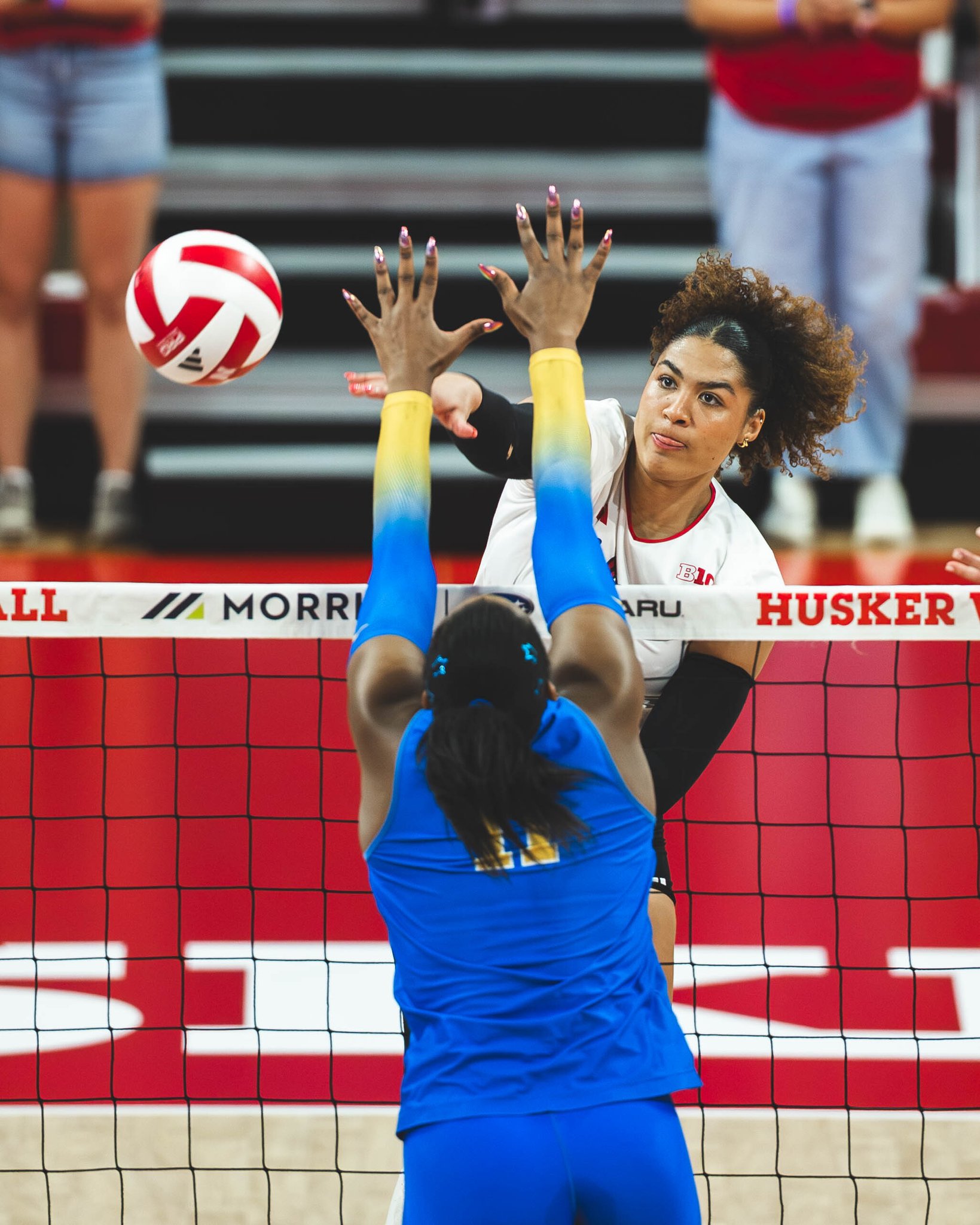
You will frequently see D1 middle blockers and opposites (including Nebraska All-American Andi Jackson #15) wear a single full-length compression sleeve on their hitting arm. Because middles rotate out for the libero in the back row, a compression sleeve keeps the hitting elbow and forearm warm between front-row turns.
Top Volleyball Arm Sleeves (With Direct Links to Buy)
| Model | Style | Best For | Where to Buy |
|---|---|---|---|
| Mizuno DXS2 Volleyball Arm Sleeves | Unpadded forearm-to-bicep knit | Liberos, DS, 6-rotation outside hitters | Amazon · All Volleyball · Mizuno USA |
| Nike Essential / Dri-FIT Arm Sleeves | Lightweight moisture-wicking knit | Humid gyms, clean ball rebound feel | Amazon · Nike |
| Under Armour Volleyball Arm Sleeves | HeatGear compression + upper grip band | Defenders who hate sleeves sliding down | Amazon · Under Armour |
| McDavid Single-Arm Compression Sleeve | Full wrist-to-bicep single sleeve | Middles & pin hitters (hitting arm warmth) | Amazon · McDavid USA |
| Padded Forearm Passing Sleeves | Integrated EVA/neoprene wrist-to-forearm pad | Serve-receive machine reps & youth passers | Amazon · All Volleyball |
Coach’s Note on Padded vs. Unpadded: Once a player reaches varsity high school or 15-Open club, switch to unpadded seamless knit sleeves for matches. Thick forearm padding deadens the ball slightly on out-of-system bump sets and can create an uneven ridge if the sleeve twists.
Why College Players Wear Leg Sleeves & Calf Sleeves
Traditional foam knee pads remain mandatory for liberos and defensive specialists who dive onto their patellas 30 times a night. Front-row athletes, however, have different demands:
- Zero bunching on the approach jump: Middles and opposites run high-speed three-step and slide approaches all match. Full-length unpadded leg sleeves (Nike Pro Dri-FIT Leg Sleeves) protect the knees and shins from floor burn when sprawling without adding foam bulk behind the knee joint.
- Integrated Hex padding that never shifts: Players who want patella cushion and full-leg coverage wear McDavid Hex Extended Leg Sleeves, which bond 9mm closed-cell hex foam directly into a thigh-to-calf compression sleeve.
- Graduated calf compression for jump volume: Setters and middles log 80 to 130+ jumps per match. Medical-grade 20–30 mmHg CEP Graduated Calf Sleeves stabilize the gastrocnemius and soleus muscles, reducing lower-leg fatigue and shin splint flare-ups across multi-day tournaments.
Top Volleyball Leg & Calf Sleeves (With Direct Links to Buy)
| Model | Coverage | Best For | Where to Buy |
|---|---|---|---|
| Nike Pro Dri-FIT Full-Length Leg Sleeves | Mid-thigh to ankle (unpadded) | Middles, opposites, pin hitters wanting floor-burn protection without knee-pad bulk | Amazon · Nike |
| McDavid Hex Extended Padded Leg Sleeves | Mid-thigh to mid-calf (9mm Hex knee pad) | Players who want a knee pad that never twists or slides down | Amazon · McDavid USA |
| CEP Graduated Compression Calf Sleeves | Below knee to ankle (20–30 mmHg) | Setters & hitters managing shin splints, Achilles load, and tournament recovery | Amazon · CEP |
| Full-Length Spandex Leg Sleeves (Pair) | Thigh to ankle with silicone gripper | Layering under a 6-inch knee pad or solo front-row wear | Amazon · All Volleyball |
Sizing & NCAA Uniform Color Rules
- How to measure arm sleeves: Measure around the widest part of your flexed forearm and mid-bicep with a soft tape. If you are between sizes, size down—volleyball arm sleeves stretch 10–15% after the first two washes, and a loose sleeve will slide toward your wrist on your first dig.
- How to wash sleeves: Wash cold in a mesh delicates bag and hang dry. Dryer heat breaks down the silicone top gripper band and spandex elasticity.
- NCAA & High School color rules: In both NCAA and NFHS high school competition, arm and leg compression sleeves are legal on court. To avoid any officiating delay, keep a pair in solid white and solid black (or your school’s primary jersey color) in your bag so all teammates wearing sleeves match when required by state or conference rules.
Explore the full showcase: Volleyball Accessories Hub — Sleeves, Star Hair Clips, Scrunchies & Court Gear →